Gamification can be a great way to engage students in learning, but it’s important it is implemented correctly and intentionally designed. I asked chat gpt to answer the following prompts:
- What design features make a game more effective in promoting learning?
- How are the benefits of game-based learning impacted by assessment?
- Does game-based learning improve academic outcomes, or does it only boost engagement?
- Do people learn academic content better from playing a game than from conventional instruction?
- Do people learn useful cognitive skills from playing a commercial off-the-shelf game?
- After reading Chat GPT’s response I know there are many necessary design features for effective gamification. The first is Integration of learning objectives in the game mechanics, students should have to use their knowledge to advance in the game. The second is immediate and meaningful feedback. The difficulty should also be adaptable to different skill levels. A few other design features are scaffolding, engagement, and opportunities for exploration, experimentation, and problem solving.
- Assessment definitely impacts the effectiveness of game based learning. In order for assessment to be effective it must assess the appropriate skills. Some games have built in assessment trackers that continuously monitor progress and provide feedback. If the assessment emphasizes grades too much it can heavily impact motivation/engagement.
- Game based learning can definitely improve both engagement and academic outcomes. An increase in engagement is much more common. Academic improvements depend on the design of the game. poorly designed education games may only increase engagement and not understanding.
- There are benefits to both, one does not necessarily outperform the other. AI says games may be useful for problem solving/applied learning, practice/reinforcement, and complex systems, while Traditional forms of teaching work well for explanation of new concepts. The most effective way to use games in education is alongside traditional education.
- Normal video games can definitely develop certain cognitive skills. These include spatial reasoning, processing, strategic thinking, problem solving, and multitasking, but it is important to consider that the transfer of these skills to real life is not instant, and may not transfer over.
OpenAI. (2026, March 12). Game Based Learning Effectiveness [Large language model]. ChatGPT. https://chatgpt.com/c/69b04399-b8e8-8327-932b-0765e95d59d7
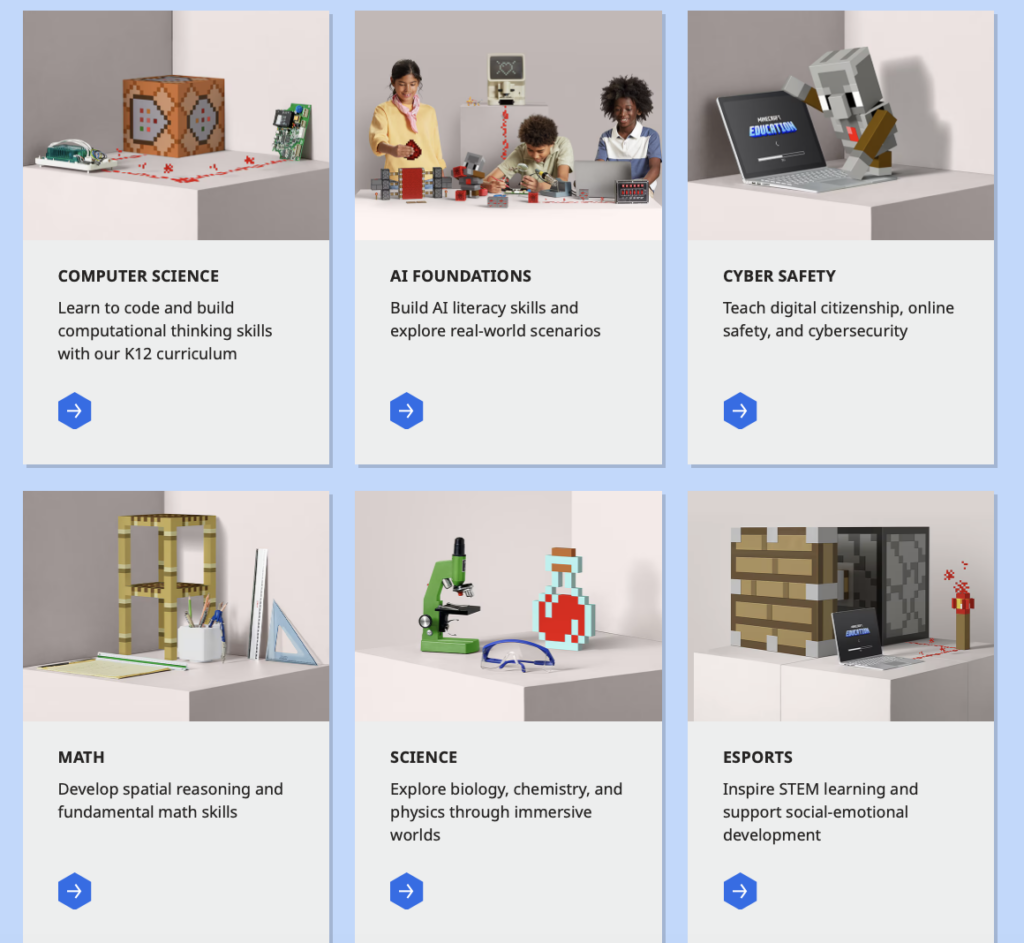
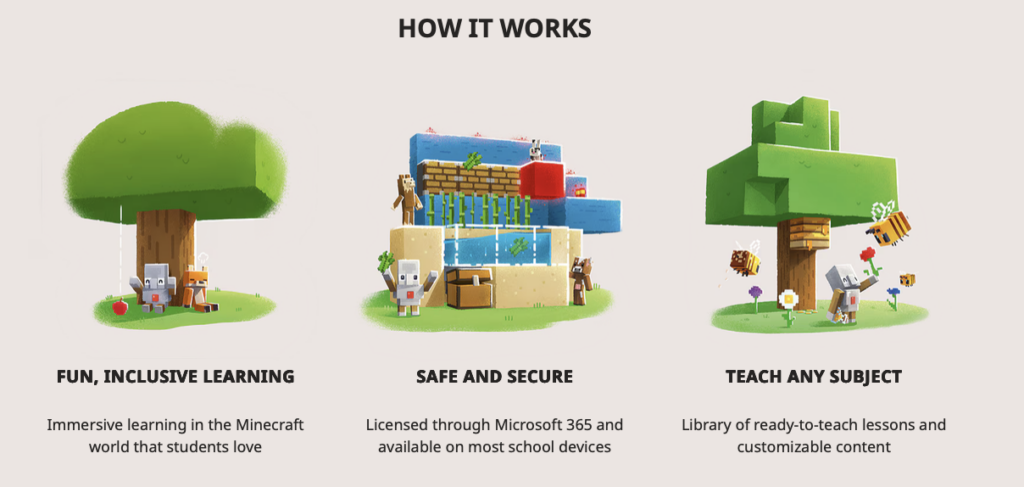
I personally found the class today on Gamification to be super interesting. I had never seen Minecraft schools before and I think the concept is pretty cool. I actually went and played one after class and it was pretty fun and educational. It could definitely be a fun activity during computer lab time or at home.


Leave a Reply