As I continue exploring how technology can support inclusive education, I am realizing that accessibility is only one piece of the conversation. Inclusion is not just about whether students can access learning, but whether they see themselves reflected within it. Cultural inclusion asks a deeper question: Whose stories are being told? Whose knowledge is valued? And whose identities are visible in our classrooms?
Digital spaces have immense potential to broaden representation. Through online libraries, digital storytelling platforms, multimedia resources, and global connections, students can access voices and perspectives that extend far beyond a single textbook. Technology allows educators to introduce diverse authors, creators, historians, and community voices into the classroom more easily than ever before. For multilingual learners, translation tools and multilingual texts can honour home languages rather than positioning them as deficits. When used intentionally, technology can help build classrooms where diversity is not an add-on, but a foundational element.
However, representation in digital spaces is not automatic. Algorithms, mainstream platforms, and widely used educational tools often prioritize dominant cultural narratives. If educators rely solely on pre-packaged digital content, there is a risk of reproducing the same limited perspectives that have historically shaped curriculum. Cultural inclusion requires critical digital literacy, both for teachers and students. It means questioning whose voices are amplified online and actively seeking out resources that reflect the lived experiences of diverse communities. Technology can also provide meaningful opportunities for students to share their own stories. Digital storytelling tools, video creation platforms, and collaborative spaces allow students to express identity in multimodal ways. Rather than being passive consumers of information, students can become creators, sharing their cultural knowledge and experiences with peers. This shift moves inclusion from representation alone to participation and agency.
One area I feel it is very important to focus on using technology to support cultural inclusion is with Indigenous education. I found the following to help support teachers and in particular, first-year teachers with resources to responsibly use technology in Indigenous education. In a BC context, the BC Indigenous Education Resources page (https://curriculum.gov.bc.ca/curriculum/indigenous-education-resources) offers curriculum-aligned materials designed to meaningfully embed Indigenous perspectives across subject areas. Platforms such as FirstVoices (https://www.firstvoices.com) support Indigenous language revitalization through community-developed dictionaries and audio recordings, allowing students to engage directly with living languages. The National Centre for Collaboration in Indigenous Education (NCCIE) (https://www.nccie.ca) provides a searchable database of authentic educational resources created by and in partnership with Indigenous communities. Additionally, open resources such as Indigenous Digital Literacies from BCcampus (https://opentextbc.ca/indigenousdigitalliteracies/) explore how digital environments can respectfully include Indigenous ways of knowing. Integrating resources like these ensures that technology is not only expanding access, but also honouring authentic voices, histories, and knowledge systems in the classroom.
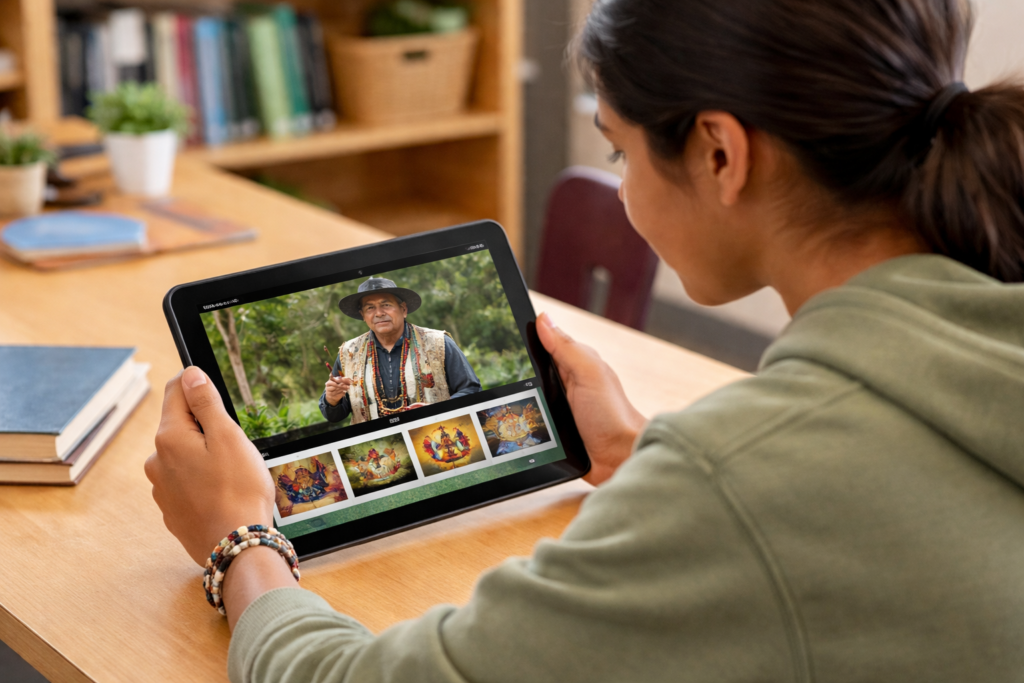
At this stage in my inquiry, I am beginning to see that cultural inclusion in digital spaces depends less on the tools themselves and more on the intentionality behind their use. Technology can either reinforce dominant narratives or expand them. As educators, we hold the responsibility to use digital tools in ways that honour diversity, promote belonging, and create space for multiple ways of knowing.


Leave a Reply