This week in EDCI 336, we explored the concepts of gamification and game-based learning in education. While similarly named, they are different things: Gamification is about integrating elements from games into learning activities to increase engagement; such elements include badges, leaderboards, experience points (xp), or other things typically found in games. Game-based learning, on the other hand, involves using or playing games that contain learning activities. A useful definition I found in this week’s readings is that game-based learning refers to “a type of gameplay with defined learning outcomes.” An example of gamification could be having an experience (xp) system in your classroom, where students build xp as they complete activities within a unit. An example of game-based learning would be learning about basic needs of food, shelter, and water by playing the longtime existing world-famous game Minecraft, which has an education edition which we explored in class this week.
eSports and Learning
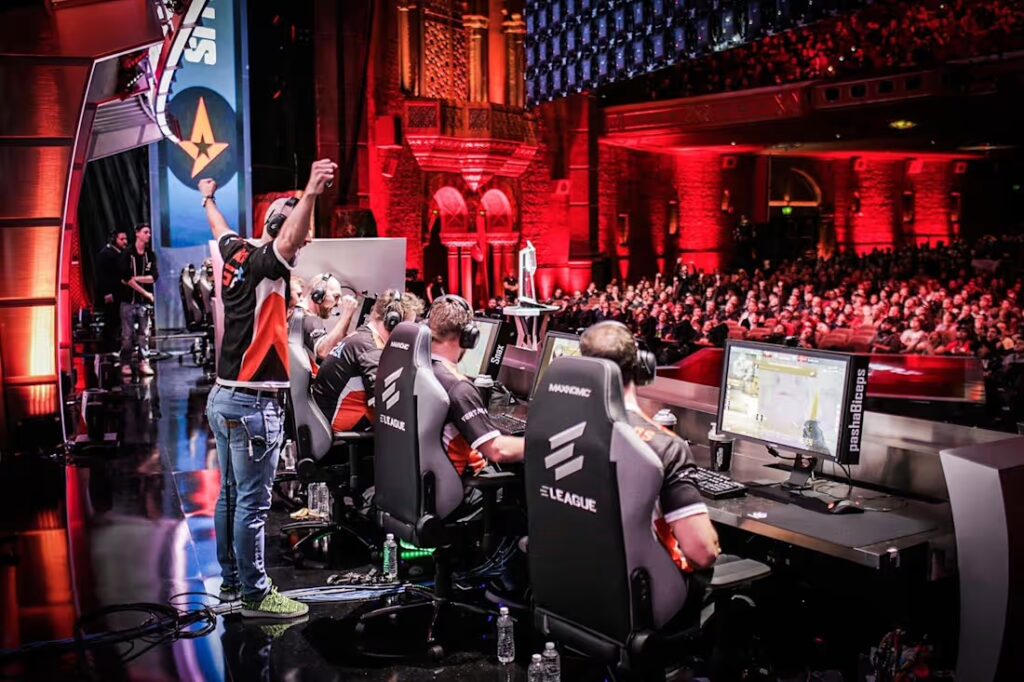
© ELEAGUE
Games ranging from Forza Horizon to Stardew Valley all contain some elements of learning. In Forza Horizon, players absorb and integrate information about cars. In Stardew Valley, players learn some basic concepts about farming. However, I believe the richest learning opportunities available right now are not in typical video games, or in educational video games, but in eSport. Just listen to this CS:GO clip from the IEM Katowice 2022 tournament (excuse the language at the end):
Even if you are not familiar with CS:GO, you should be able to tell that there is an extremely high level of communication (a core competency) occurring between the teammates. And this is not a rare occurrence – in many games with a popular eSports scene, communication like this is occurring for nearly an hour straight. Players must learn to express and receive information quickly, respectfully, and in sufficient detail. If they fail to do so, they soon get immediate feedback in the form of losing the game!
The thinking core competency is also hit in most eSports as players are frequently faced with difficult strategic decisions that they must make on the fly, either as an individual in communication with teammates or as broader units. Giving examples of these decisions can be difficult if the learner doesn’t know the broader context (goal of the game, situation, etc.), so I’ve asked ChatGPT to explain the concept of when to “save” in CS:GO:
“In Counter-Strike: Global Offensive, saving means choosing not to fight when a round is almost certainly lost so you can keep your weapons and equipment. Because guns and gear cost money each round, dying would make you lose them and force you to rebuy next round. By hiding and surviving until the round ends, you keep your equipment and give your team a better chance in the following round.”
While there are issues of debate when talking about teaching kids through video games (not the least of which is that the goal of one team in CS:GO is to plant a bomb), I believe video games are underutilized and often less recognized as learning tools than they should be.


Leave a Reply