Over this past week, we discussed EdTech models and how they work when integrated into the classroom. I will discuss each model below and describe ways to integrate it into the classroom.
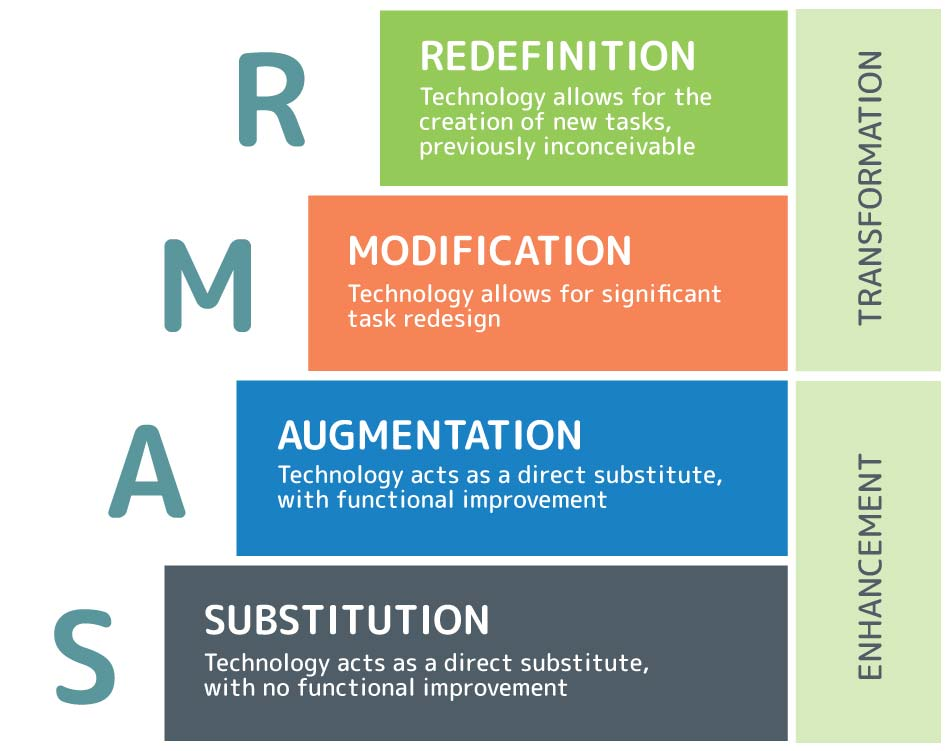
SAMR: This model stands for Substitute, Augment, Modify, Redefine. Substitution is to enhance learning, which means that it could be a tablet for reading rather than a paper book. Augmentation is considered an enhancement that substitutes improvements, such as an e-book with a dictionary or highlighting different features. Modification is considered a transformation where tech redesigns the task, such as using a shared doc (Google Doc) for collaborative work. Reduction is also a transformation that allows the creation of new tasks, such as a multimedia documentary rather than a written report. The goal of this model is to encourage tech use while keeping in mind the original task and how it has evolved to incorporate tech.
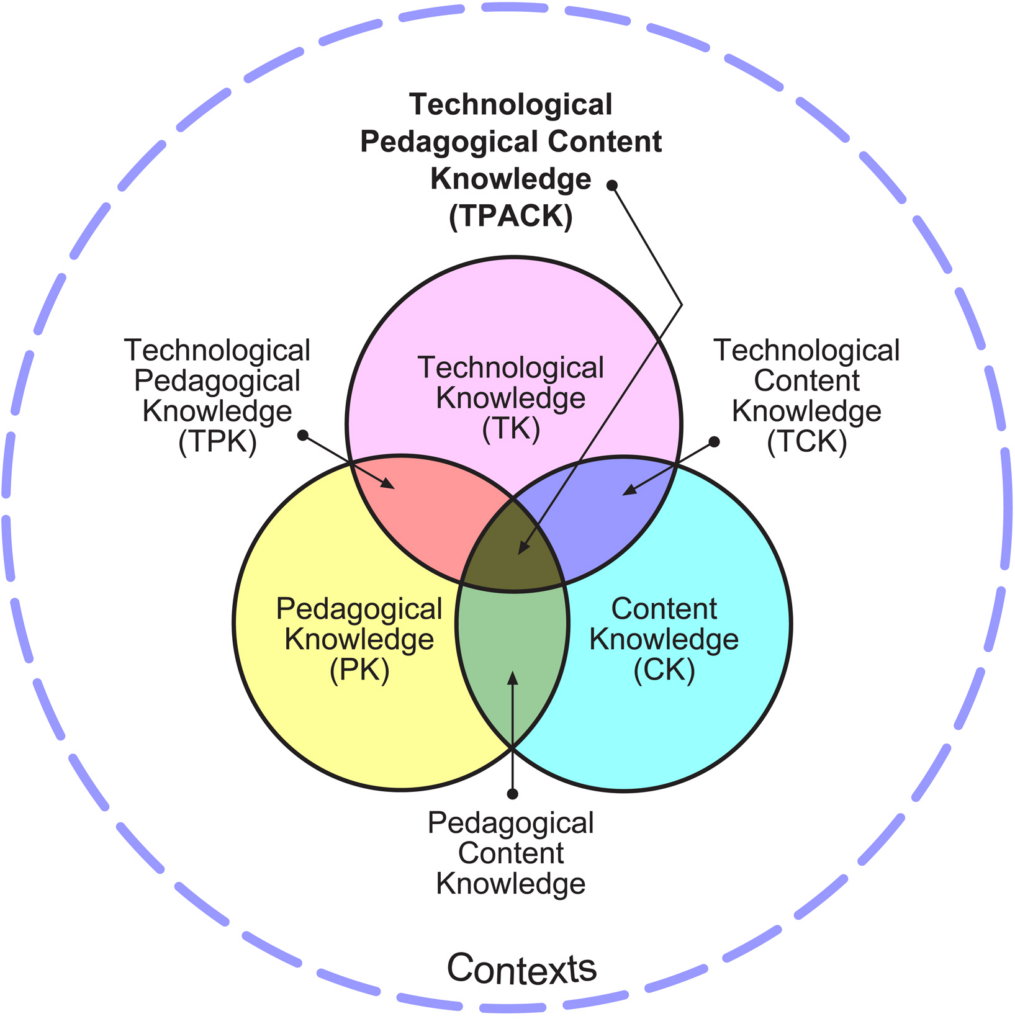
TPAK: This model stands for Technological Preagogical Content Knowledge. This model is a Venn diagram with three circles: technological knowledge, content knowledge, and pedagogical knowledge. Each of these overlaps to create technological content, pedagogical content, and technological pedagogical content. This model relates to teachers and how they work together to create a balanced teaching environment that aligns with their philosophies and students’ needs, as well as to tech.
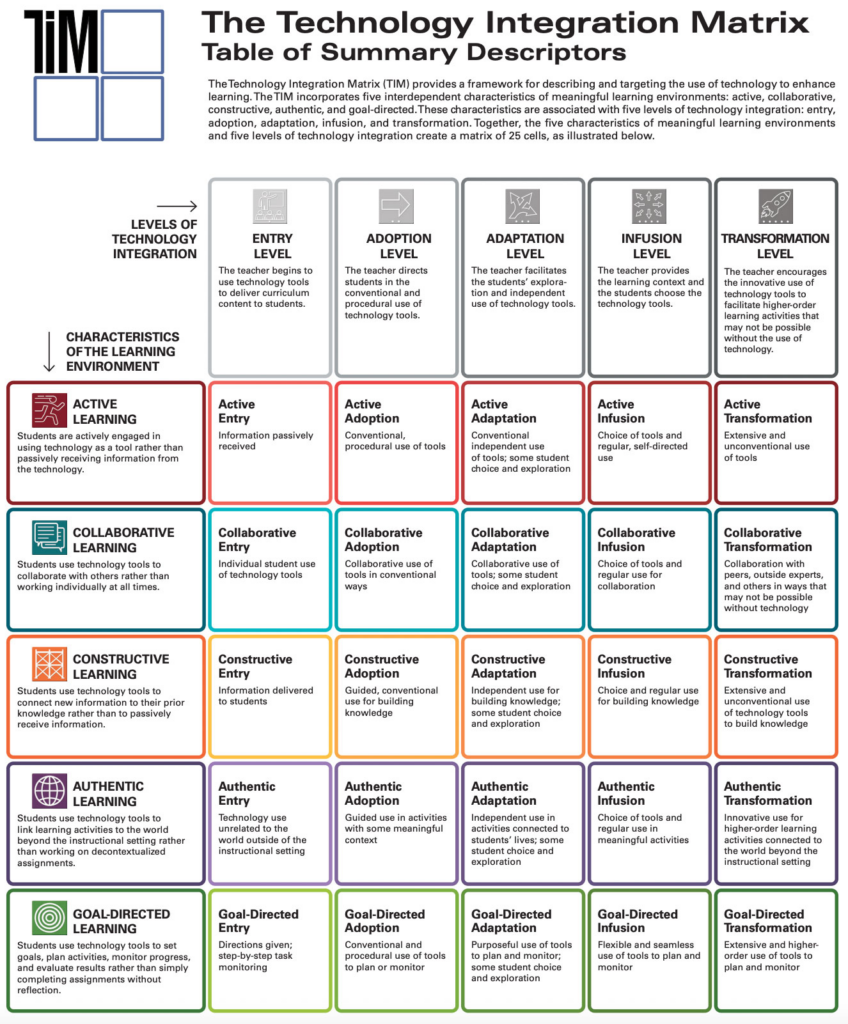
TIM: This model stands for Technology Integration Matrix. This model describes how to use technology to enhance learning. This model is a chart that uses 5 characteristics: active, collaborative, constructive, authentic and goal directed to then move across to see the level of technology integrated: entry, adoption, adaptation, infusion and transformation. I like this model because it can easily track the level of tech and see where the learning lies within the model. It can also be easier to see the move between levels, thereby providing more information on where you can move with technology.
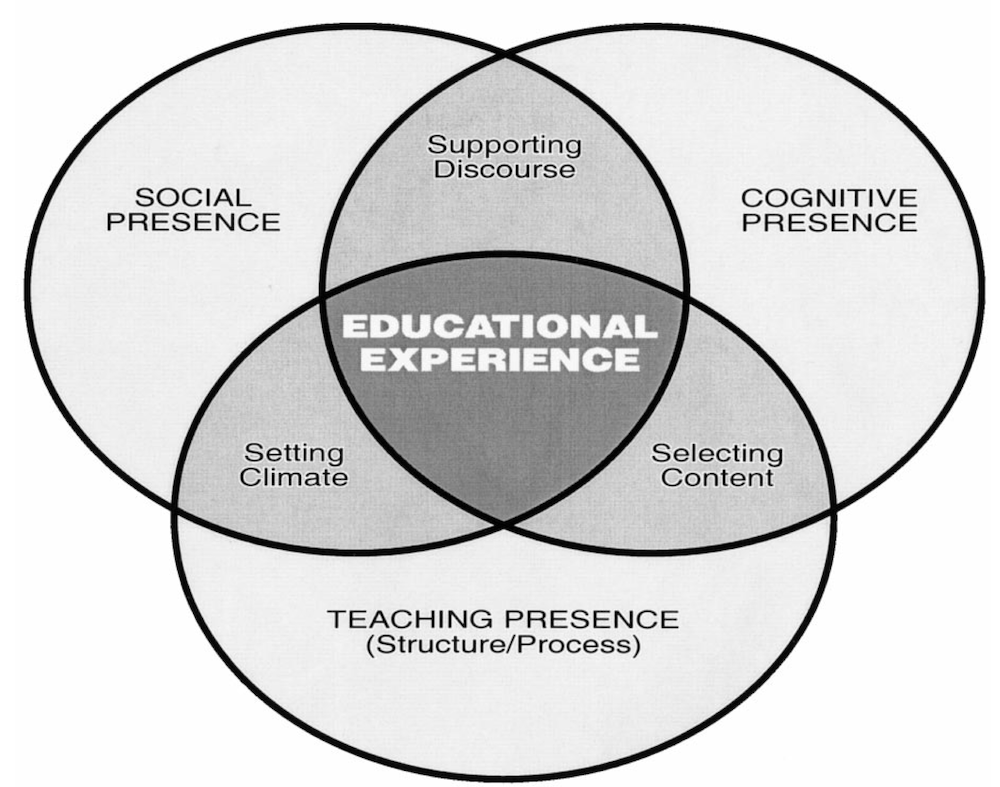
COI: This model stands for Community of Inquiry. This model is another Venn diagram with three categories: social presence, cognitive presence, and teaching presence. In the middle of all of them is an educational experience. Additionally, each of the crossovers is: supports discourse, sets the climate, and selects content. This framework supports a learning environment, and by developing each of these, students and teachers can best support each other.
These EdTech models can be so helpful when beginning to introduce technology to the classroom or education. They are useful tools to help the teacher align well with the students. I am excited to continue exploring these frameworks, especially as I head into my first practicum! See images of each model below!


Leave a Reply