This week we discussed integration models that are used to help teachers use educational technologies in their practice effectively and meaningfully. When I first read about these models before class, I assumed they were for designing an online classes. It wasn’t until discussing with my peers that I realized that they can be used for any use of technology in any classroom. The models seem far more useful after this perspective shift! I will outline the basics of the four models discussed below but first I’ll list my general take aways from the models as a whole.
General Take-Aways
- Incorporating and using technologies in the classroom should always be intentional. The goal is for technology to augment learning when possible
- Technology cannot replace a teacher’s pedagogy
- The TIM and CoI models emphasize experience and collaboration in technology learning. I was more drawn to these models because those are things I value.
- I wonder how the Focused Ed resources fall into these models? Does how you use the resources impact how well they fit into these models?
Model Overview
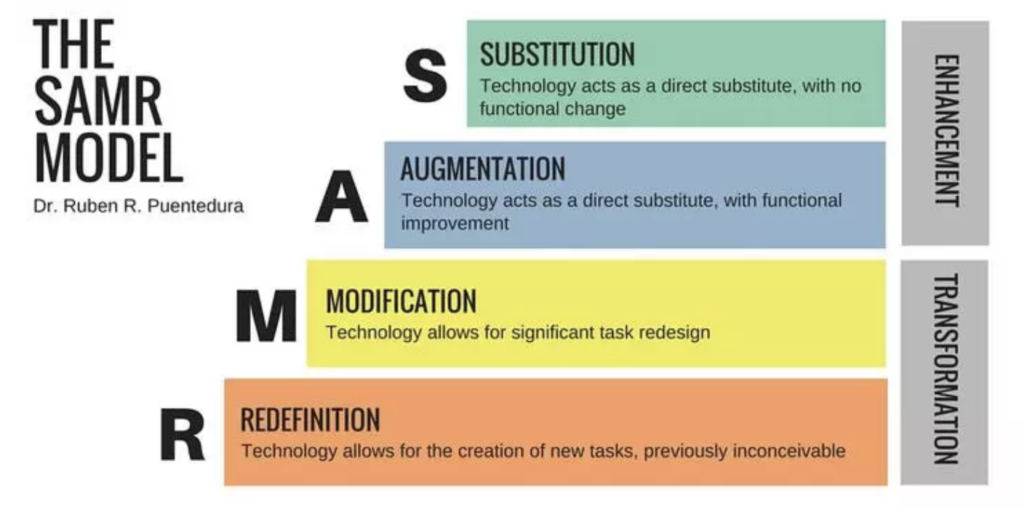
The SAMR Model
SAMR stands for substitution, augmentation, modification and redefinition, and represents four levels of technology integration that move from simple enhancement of learning to transformation of learning.
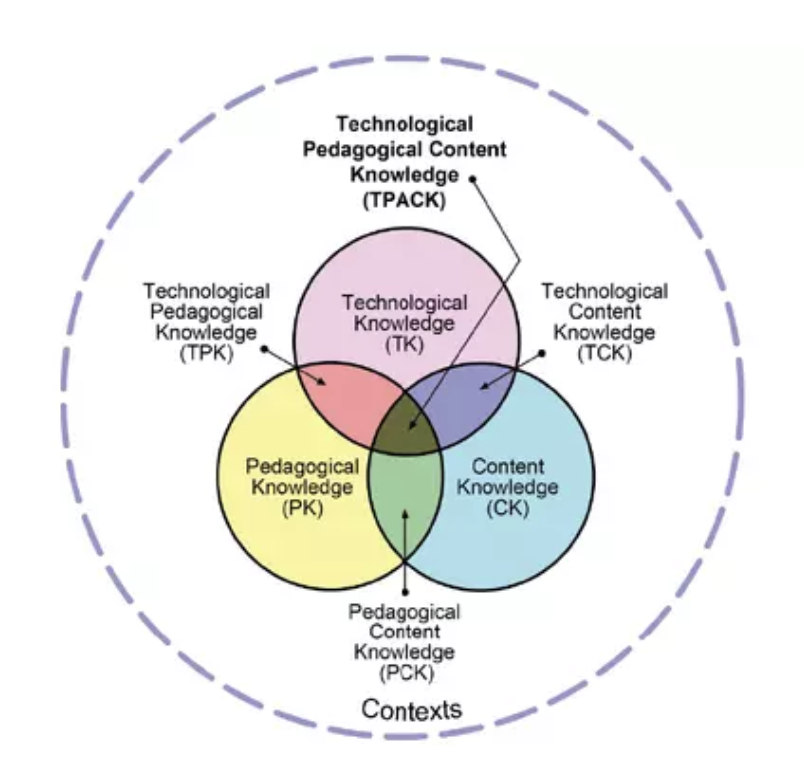
The TPACK Model
The Technology, Pedagogy and Content Knowledge model emphasizes 7 different teaching knowledges through the intersection of a teacher’s knowledge of the content, the ways that knowledge is taught (pedagogy) and the tools used while teaching (technology). Importantly, the model emphasizes context, taking into consideration equity, social influences and other impacting factors.
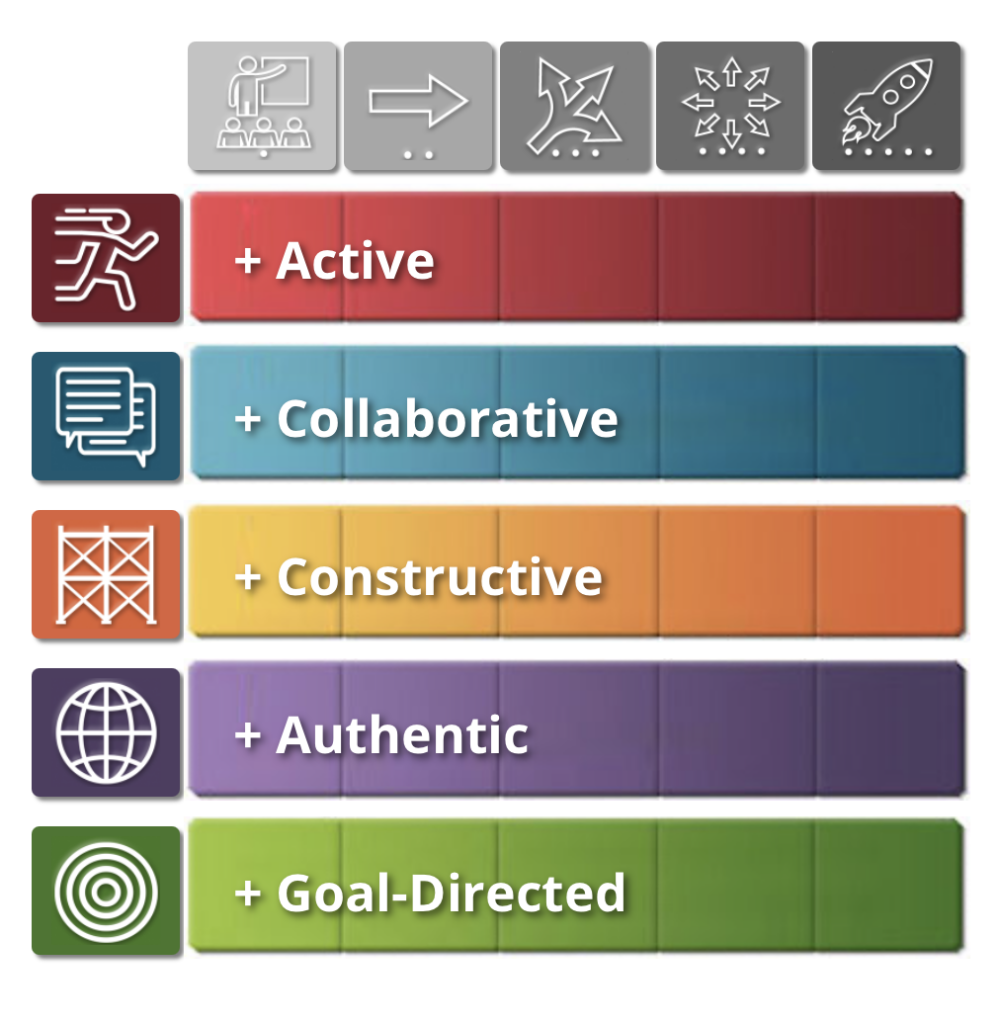
TIM Model
The technology integration matrix is more complex, with 5 characteristics of meaningful learning environments intersecting with 5 levels of technology integration. I like this model as its purpose is to specifically help educators use technology to enhance learning. Creating meaningful learning environments for our students should always be the goal.
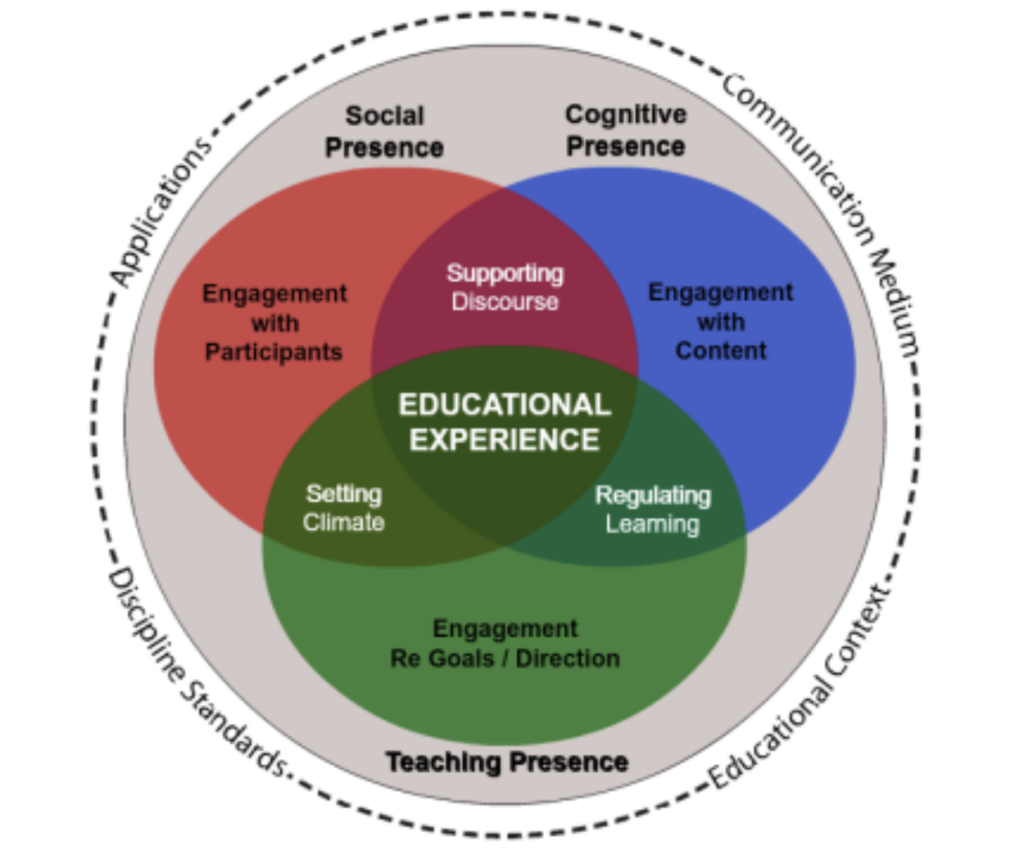
CoI Framework
The Community of Inquiry framework outlines three intersecting areas that contribute to meaningful learning: social presence, teaching presence and cognitive presence. While discussing this model with my peers, we almost forgot it was for technology because it felt so applicable to learning in general. I particularly liked the social presence element and its intersection with the teaching presence, setting climate. I’ve always thought of teachers as the “weather makers” in the classroom, and this piece really encapsulates that.
POD Check-Ins
We also discussed in class the progress our groups have made for our POD inquiries. It was really neat to hear the topics that were chosen, and the format that their final projects will take. I’m excited to see what everyone comes up with in the end. It sounds like there will be some valuable resources that we can use as new teachers!
I love the inquiry format of these assignments. The range of topics chosen from the class highlights how many different interest areas there are in the group. Some groups are making websites, podcasts or resource packets. The inquiry format allows for freedom in topic choice but also in how we express our learning, which I think is really cool!


Leave a Reply