
Hej! Hur mår du? Jag mår bra. (Hi! How are you? I’m good).
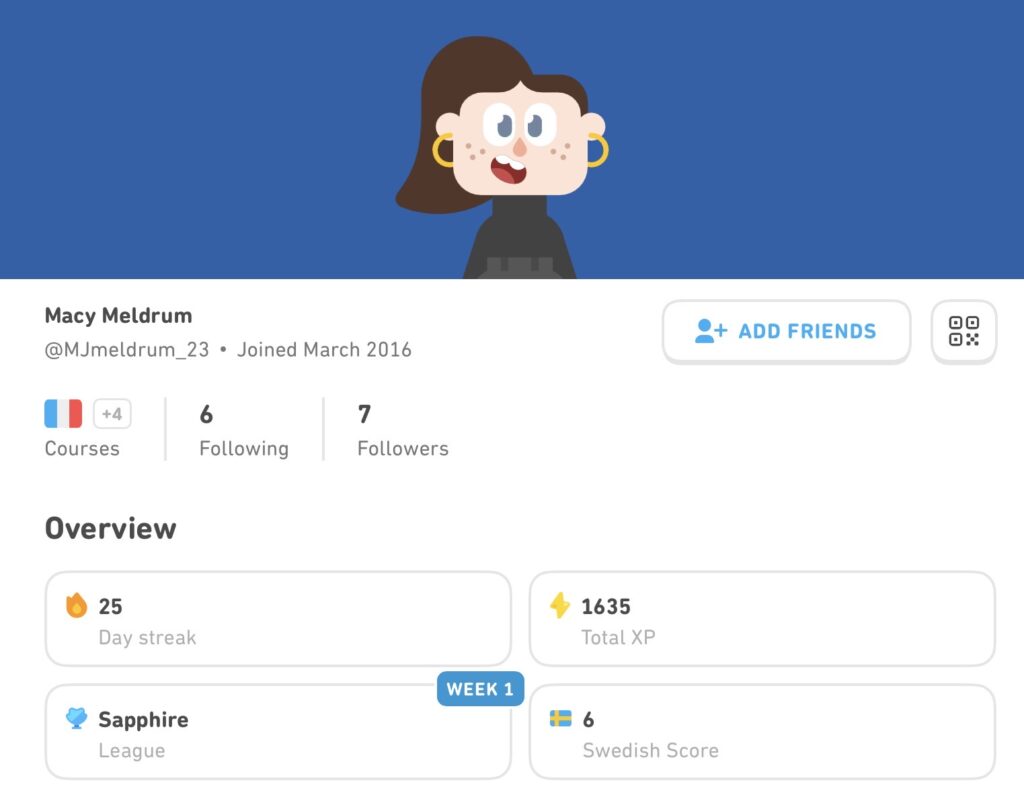
I haven’t made an inquiry blog post for a while, but that doesn’t mean I haven’t been busy inquiring into Swedish language and culture. I’m approaching a month into my language learning journey – I just notched my 25th day of Duolingo. I’ve been aiming for one mini lesson a day, which takes me around 5 minutes. I’m definitely making progress, but slowly.
Duolingo’s approach is interesting in that it teaches individual words and phrases, but no grammar. I find myself wondering about syntax a lot… for example, I’ve gathered that sometimes, the “a” before a noun in Swedish is “en,” and other times, it’s “ett.” I couldn’t figure out the pattern, so I looked it up. And turns out, there isn’t much of a pattern at all. Unlike in English, where “a” precedes a word starting with a consonant and “an” precedes a vowel, Swedish speakers have to memorize when to use each version. “En” is more common (which I’d already gathered from seeing it pop up frequently in my Duolingo lessons), and “ett” is only used 25% of the time. Often, “ett” belongs with non-living things and “en” with living things, like “en hund” (a dog).
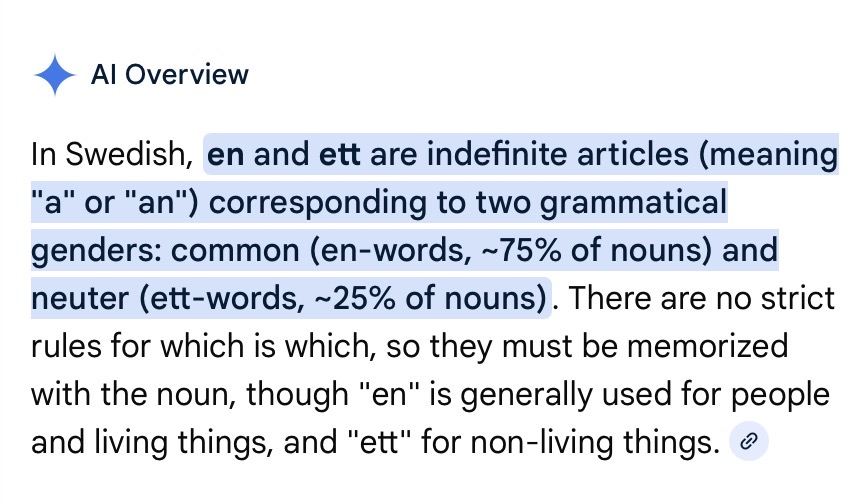
Thanks, AI overview!
I’ve noticed that Duolingo’s approach to teaching languages seems to rely on users gradually picking up words and phrases and filling in the blanks using pattern recognition. There’s no explicit teaching, which honestly, I might appreciate. I would love to learn how Swedish works phonetically, like, What is the difference between a, ä, and å in terms of sounding out a word? I think some knowledge of the phonemes that make up the Swedish language could be helpful as I approach unfamiliar words like place names (e.g., I don’t want to embarrass myself by majorly mispronouncing someone’s hometown or the name of a train station I’m trying to get to).
New words and phrases unlocked
- Sverige = Sweden
- Min man = my husband
- Min fru = my wife
- En hund = a dog
- Lång = tall
- Rolig = funny
- Smärt = smart (duh!)
- Snäll = nice
- Från = from
- Hur mår du? = How are you?
- God kväll! = Good evening!
- Vi ses! = See you!
- Bra = good
So now, I can say, “My husband from Sweden is tall and funny!” Min man från Sverige är rolig och lång! Just kidding, I do not have a husband from Sweden (Yet! Growth mindset!).
Plus: Following Team Sverige in the Winter Olympics
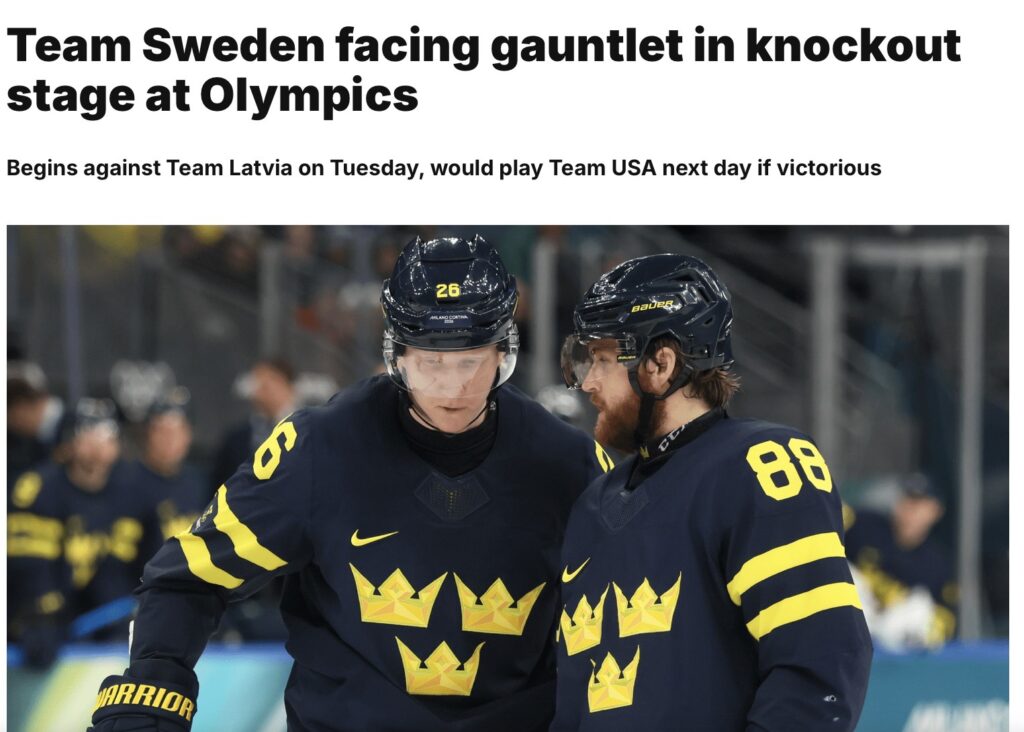
The Swedish men’s hockey team plays their first elimination game of the 2026 Olympics on Tuesday and I’m planning on tuning in! They take on Latvia, and the winner will face tough competition in the quarterfinal – the #2 seeded Americans.
According to The Player’s Tribune (I found this great article written by NHL player Victor Hedman), ice hockey is a cornerstone of Swedish culture. It is deeply woven into the national identity and Sweden has a reputation for producing top-tier NHL players. I grew up in Vancouver idolising Daniel and Henrik Sedin and cheering them on as they took the Canucks to the Stanley Cup Finals. I’m excited to connect with my students in Sweden over hockey!
Sounding it out
Back to the phonics thing… as part of our PDPP course load, my cohort is currently taking a course in reading. We’ve talked extensively about how to teach phonological awareness, phonemic awareness, and skills like word attack to early primary students. Here’s what I found on the web about Swedish letter sounds:
Det Svenska Alphabet (The Swedish Alphabet)
Video: https://youtu.be/aGoC_gVjdr4?si=JhybGoqLinv-UgB7
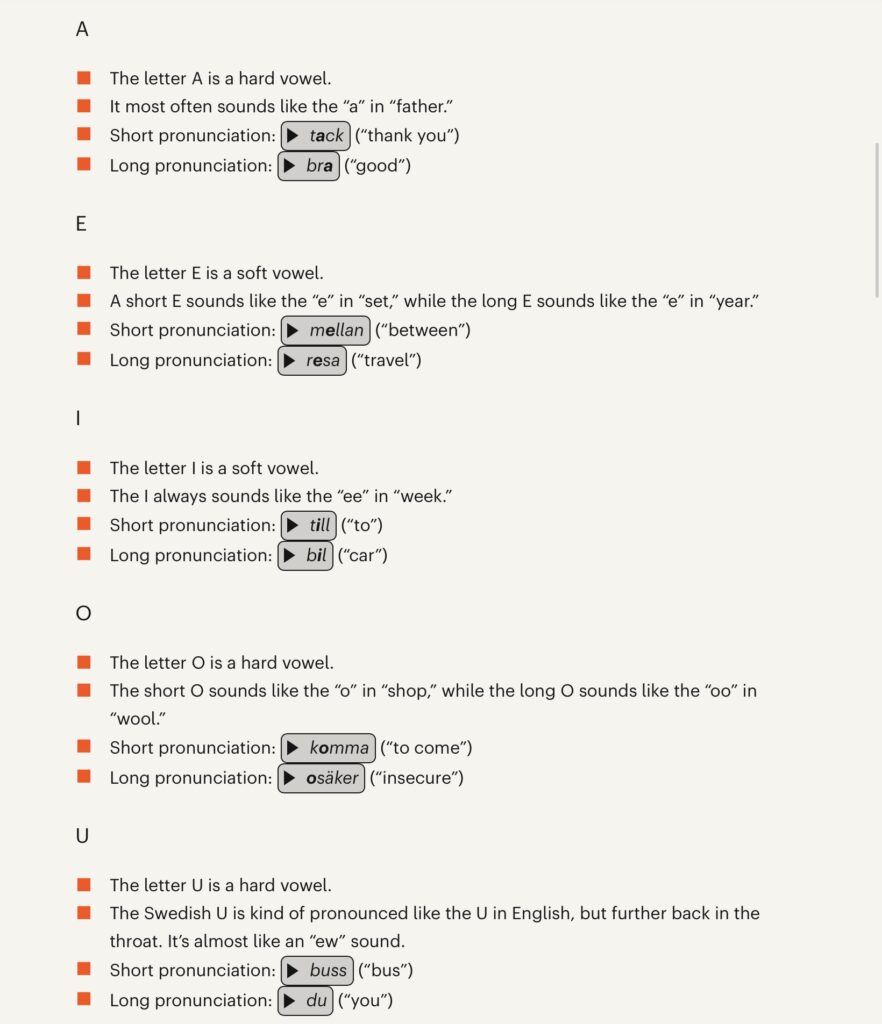
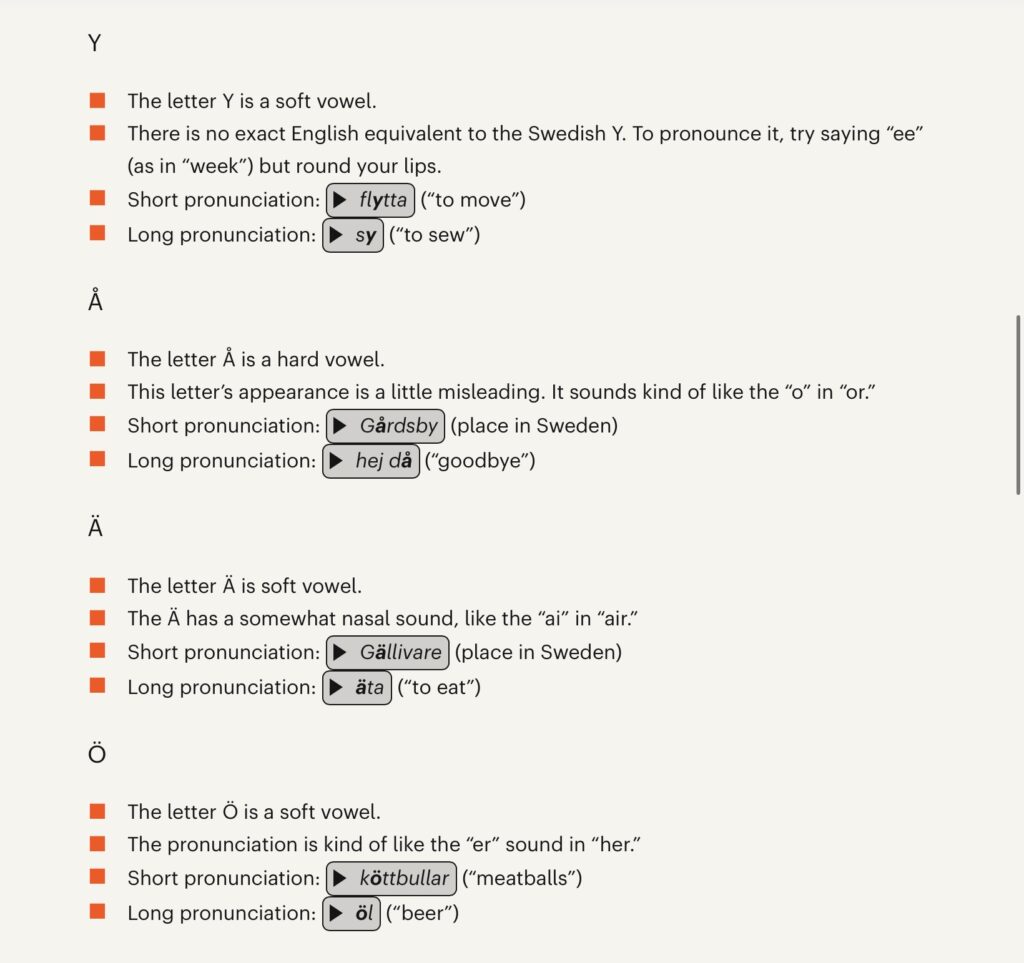
I also looked at an article by a Babbel contributor about Swedish letter sounds – it was very helpful. Here is a short guide on how to pronounce the vowels in Swedish:


Leave a Reply