This week we had the opportunity to attend two virtual professional development sessions through Focused Education. I had written in my previous post about the Digital Classroom, we had a guest speaker give us a broad overview of the many Focused Education Resources. This week we attended sessions that went into greater detailed for one resource each. You can find more information about Focused Education here. I attended two sessions; Student AI Literacy Lessons K-12 and NFB K-12: More than Just Great Canadian Films!
Student AI Literacy Lessons K-12
As most sessions do, today started with a minor tech glitch. We unfortunately missed the first 10 minutes of the session, but got in just in time for this amazing slide. The presenter was reminding everyone that AI is just a tool, it is not necessarily good or bad, it depends on how you use it.
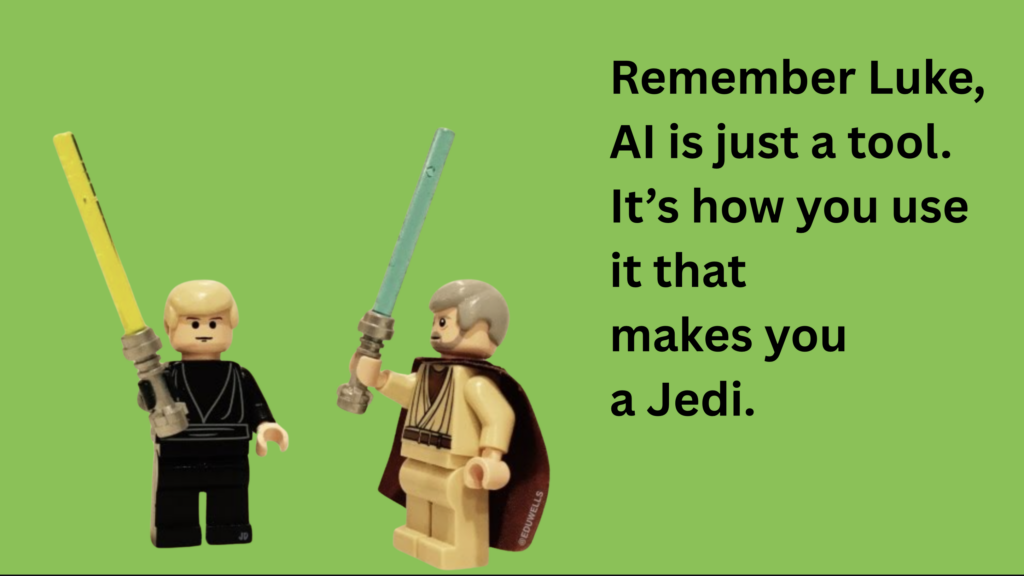
She went into more detail about how GenAI actually works, breaking it down in a way our students will better understand (and me). She went on to discuss issues around privacy, personal data, intellectual property and ethical uses. All topics necessary to discuss with our students. An interesting point around equity was also brought up. The best AI tools are kept behind a paywall, creating a divide between those that can afford them and those that can’t.
The biggest take away from the session was the idea of balance, and how to discuss this idea with our future students. Balance is a skill that applies to so many things in life, from our diets, exercise practices and social media consumption. It also applies to AI use. The environmental consequences of AI use should be taught in age appropriate ways for students to understand. That prompts require less energy than pictures of videos, but all use requires energy in some form. Balance involves including AI use when thinking about our environmental footprint, and reducing when and where we can, using AI when needed.
Another important takeaway, that validated some of my thoughts toward AI, is that humans must be kept in the loop when using AI and critical thinking should remain at the forefront. I think it is the combination of human creativity and AI efficiency that makes these tools so powerful. Taking away the human piece, reduces the value of the outputs. These thoughts have been associated more with my own use than with students. Focused Education has helped bridge this gap between my thoughts and attitudes toward AI and how to teach our students.
Focused Education offers Student Artificial Intelligence Lessons that are specific for various age groups from kindergarten to grade 12. Each age category has a set of sequenced lessons, that teachers can use to teach students about what AI is, the ethical and environmental implications, how to use it safety, the risks etc. There is a wealth of knowledge here for both teachers and students. I only worry AI will evolve quicker than these programs can be updated, however it is a great start and a valuable resource.
NFB K-12: More than Just Great Canadian Films!
The second session I sat in on was with the National Film Board of Canada. The NFB has two sites, a sleek Netflix-esque site full of movies and a second educational site with a wealth of resources for teachers. I hadn’t realized until after the session, that I had watched a fantastic movie on NFB about Canadian Residential Schools for our philosophy class only a few weeks ago. The movies and videos from the NFB often tackle heavy, important topics that seem overwhelming to bring into the classroom. They not only offer videos to open the door to these conversations, but many of the films come with educational resources for teachers such as discussion questions, prompts, mini-lessons and applications to specific subject matter.
It was fantastic to see so many films by Indigenous folk. This will be a great resource when sharing Indigenous knowledge. I was told by an Indigenous educator that Indigenous knowledge should be shared by Indigenous voices. That’s not to say we can’t cover those topics, or perspectives, but rather sharing Indigenous videos, words or art when it is not feasible to have someone share it themselves. As I continue through this program, and learn more about the First Peoples Principles of Learning, it becomes more apparent how important it is to integrate and teach from these perspectives. I’m really excited to explore how NFB can support this!
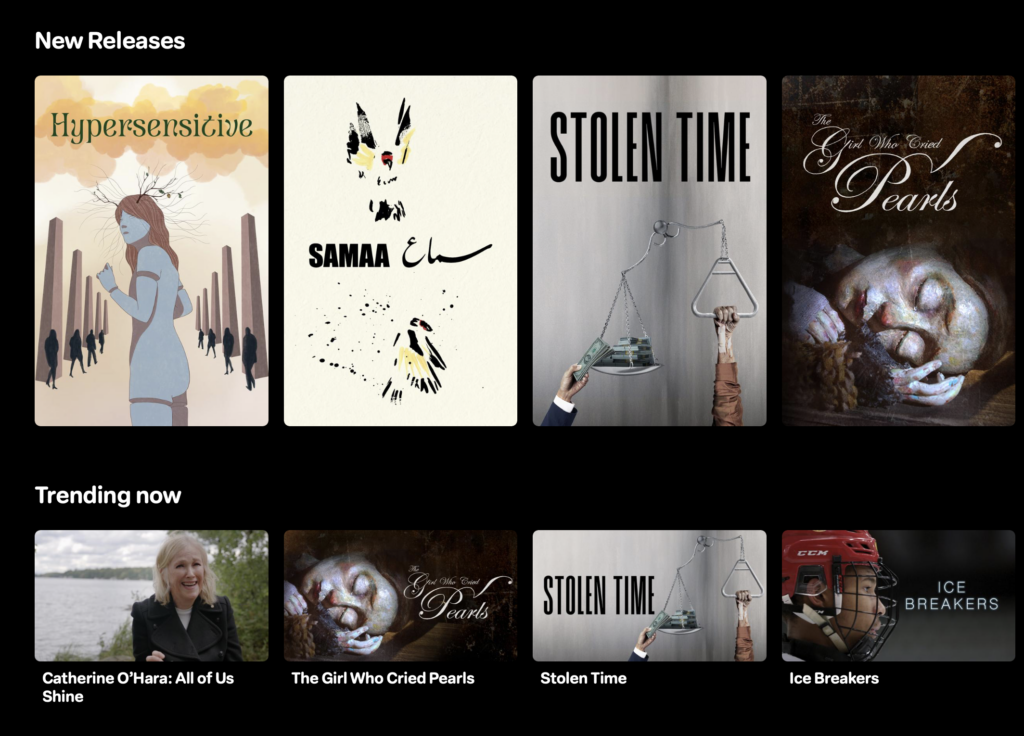
The only downside to the NFB resources, is that there are few resources suitable for primary aged students. I am not sure what grade I will end up teaching, but primary is definitely a possibility. The speaker from NFB recognized this downfall and noted that it is something the organization is aware of and is planning to fill this gap. For intermediate grades, they offer a series of mini-lessons and videos that use “clips” or segments from larger films that are appropriate for that age range. Despite this, I still think this is a valuable resource that can be adapted to meet our students learning goals.
Reccomendation
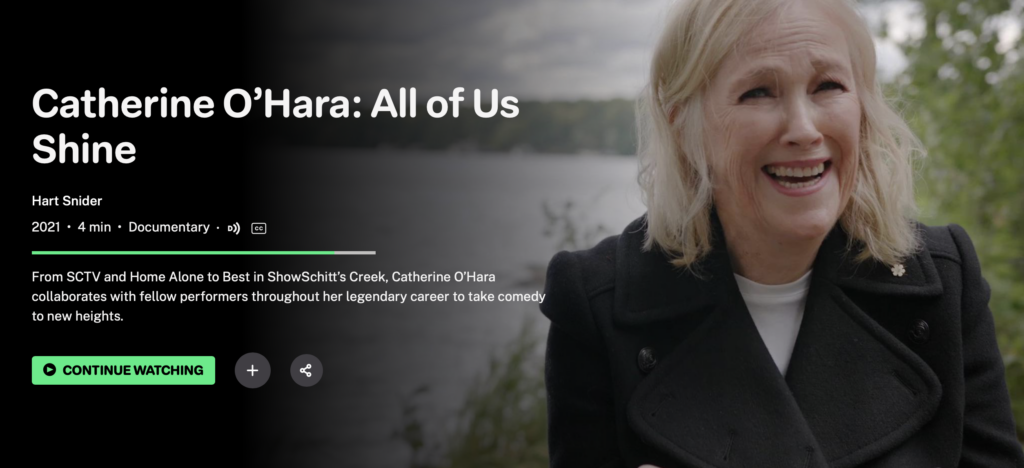
I just watched the 5min mini documentary of the late Catherine O’hara that was produced by NFB. It was fantastic. I look forward to browsing their site and watching many other Canadian gems.


Leave a Reply