This week’s exploration of Focused Education Resources, specifically the Digital Classroom, was a valuable opportunity to become familiar with the wide range of online tools available for both students and educators. I was struck by the diversity of resources and how intentionally it aligns with UDL principles by supporting accessibility and choice for diverse learners. The introduction to age-appropriate research tools stood out to me as particularly useful. By exploring tools such as KnowBC, ProQuest and WorldBook Student, I gained a more clear understanding of how students can engage in inquiry using credible and use-friendly resources. These platforms not only provide a wide variety of texts and media but also support students in developing research skills such as how to cite sources and create references. This makes them especially valuable for inquiry-based projects and for teaching students to conduct research in a responsible way. I am also very interested in the LiveIt Earth activities, as they seem to emphasize local conservation and connection to wildlife. I am looking forward to learning more about how these resources can be used in the classroom during Friday’s seminar.
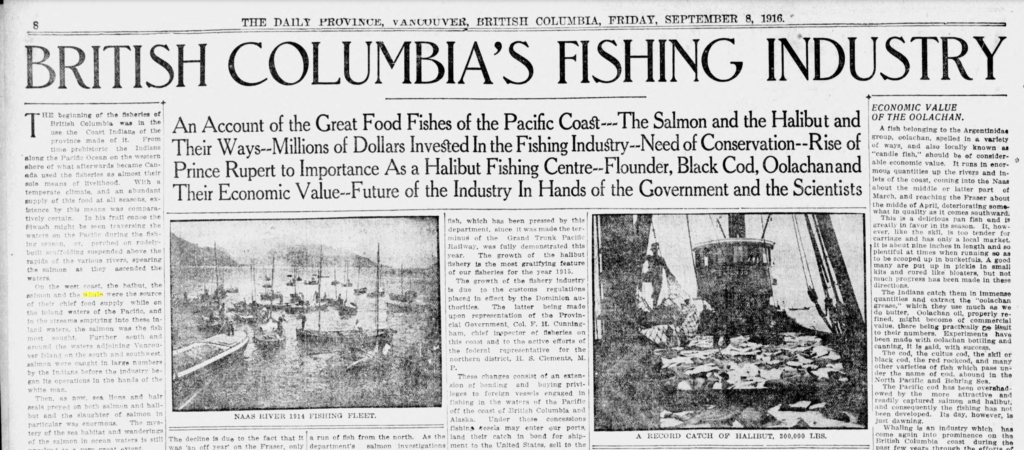
In order to get to know the website, I used multiple research outlets to look into the fish and whale conservation in BC. What an amazing resource to learn the history of BC! Below is a photo from a newspaper article in 1916.
Discussion recap: Risks of AI
How privileged we all are to benefit from technologies that simultaneously cause harm to others. This idea alone can drive you can crazy. As discussed in class, it raises difficult questions about choice and responsibility.
Are we given choice?
While we may technically choose to not use these tools, as educators we also have a duty to understand them in order to protect students and teach safe, ethical use. This creates a moral dilemma: using the technology can feel like giving in to a system that undermines human rights yet avoiding it leaves learners and us unprepared and vulnerable. As we see in our society every day, many powerful tech industries prioritize profit and new tech advances over people, community, and justice, while promoting benefits that makes their work seem exciting and necessary. It is easy to get excited about it, this amazing technology that can be used for inclusive education and unlimited resources… but then you look at the news and see that it openly funds a government that is taking away people’s human rights, you are back there again, the moral dilemma.
I enjoyed today’s discussions about how unsettling this feels and what we can do as educators to help mitigate some of the harm.


Leave a Reply