This week was all about Designing for Learning (UbD), which includes Universal Design for Learning (UDL) and the Analysis, Design, Development, Implementation, and Evaluation (ADDIE) model. In general, these acronyms are all ways to implement inclusive learning in the classroom, ensuring all students’ needs are met. These are essential for teachers to implement in their classrooms to achieve the highest student success. Though it can be overwhelming at first with so many resources on how to incorporate these practices into the classroom, I feel a new teacher (myself) will do my best to adopt these models and might start with a few principles and gradually add more as I get stronger.
Designing for Learning: This wording comes from the textbook by Grant Wiggins and Jay McTighe, which discusses the various components that can be included when designing for learning. Some of the components include backward design, understanding, the six facets of understanding, planning for learning, teaching for understanding, and the design process. In some of these, images show the reader each element as it is explained. This textbook is worth looking into when learning more about designing for learning and beginning to design in general. Overall, designing for learning can be a big topic, but it is so important that all students in the classroom are included and accommodated in their learning. Below is an image of backward design that illustrates how it works.
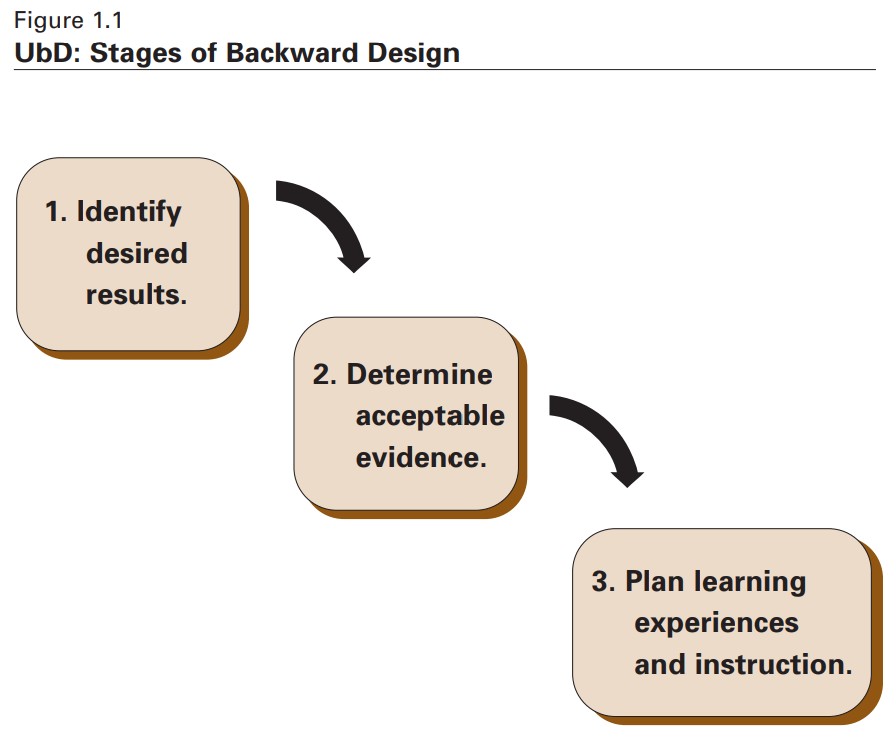
Wiggins and McTighe, 2005, Understanding by Design, Expanded 2nd Edition, Figure 1.1 Stages of Backwards Design.
Universal Learning Design: Similar to the last (UbD), CAST’s Universal Learning Design uses a different framework, organized into 3 categories. They are designing multiple means of engagement, representation, action & expression. Engagement includes welcoming interests and identities, sustaining effort and persistence and emotional capacity. Representation includes perception, language & symbols, and the building of knowledge. Action & Expression includes interaction, expression & communication and strategy development. *All from this document. These UDL guidelines aim to engage learners in multiple ways and target different parts of the brain based on their learning needs. I find that, when using and incorporating UDL in a lesson, the checklist is the easiest tool to use and the easiest to understand, ensuring UDL is in every lesson. These websites and tools will be very helpful throughout my teaching journey, especially at the beginning.
Citation: Universal Design for Learning Checklist. Randy LaBonte EDCI 336 Course Resources, 2026.
ADDIE MODEL: The linked website explains the ADDIE model and outlines each step of the process. In my opinion, this model is the easiest to follow. The steps are very open-ended and therefore easy to adapt to any lesson. Analyze is what the learners need. Design is how the material will be delivered. Develop is the actual lesson development (production and materials). Implement is actually doing the lesson. Evaluation is happening all the time and is either summative or formative. This model is simple and lays out the steps super easily.
Overall, all of these models work together to create an inclusive classroom for all learners and I will use pieces from all of them!
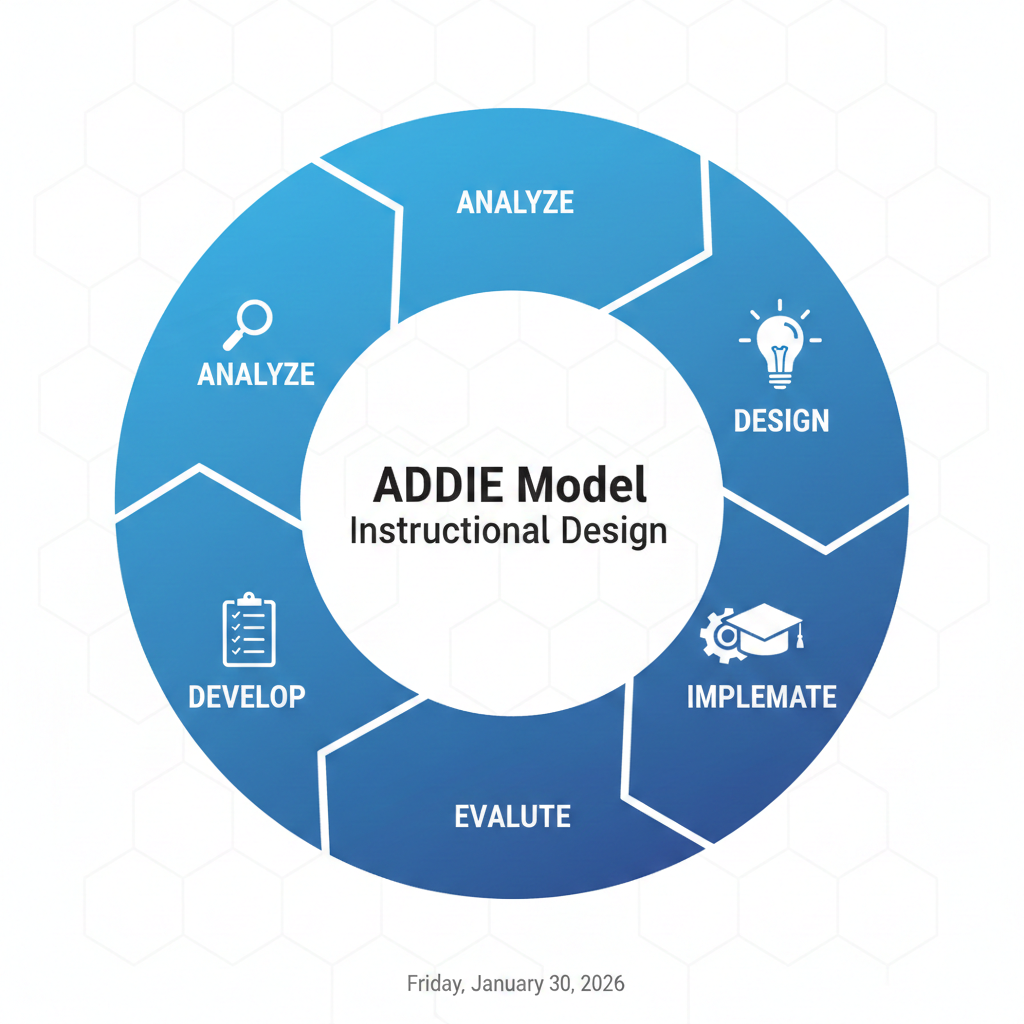
Image Citation: Designing for Learning: Randy LaBonte Slides for EDCI 336, January 30, 2026.


Leave a Reply