This week we looked at readings that explored learning theory, both those that attempt to describe how one learns in general and more specifically in online settings. In class we had a chance to consider our own beliefs about learning and reflect on how these might impact the way we design learning.
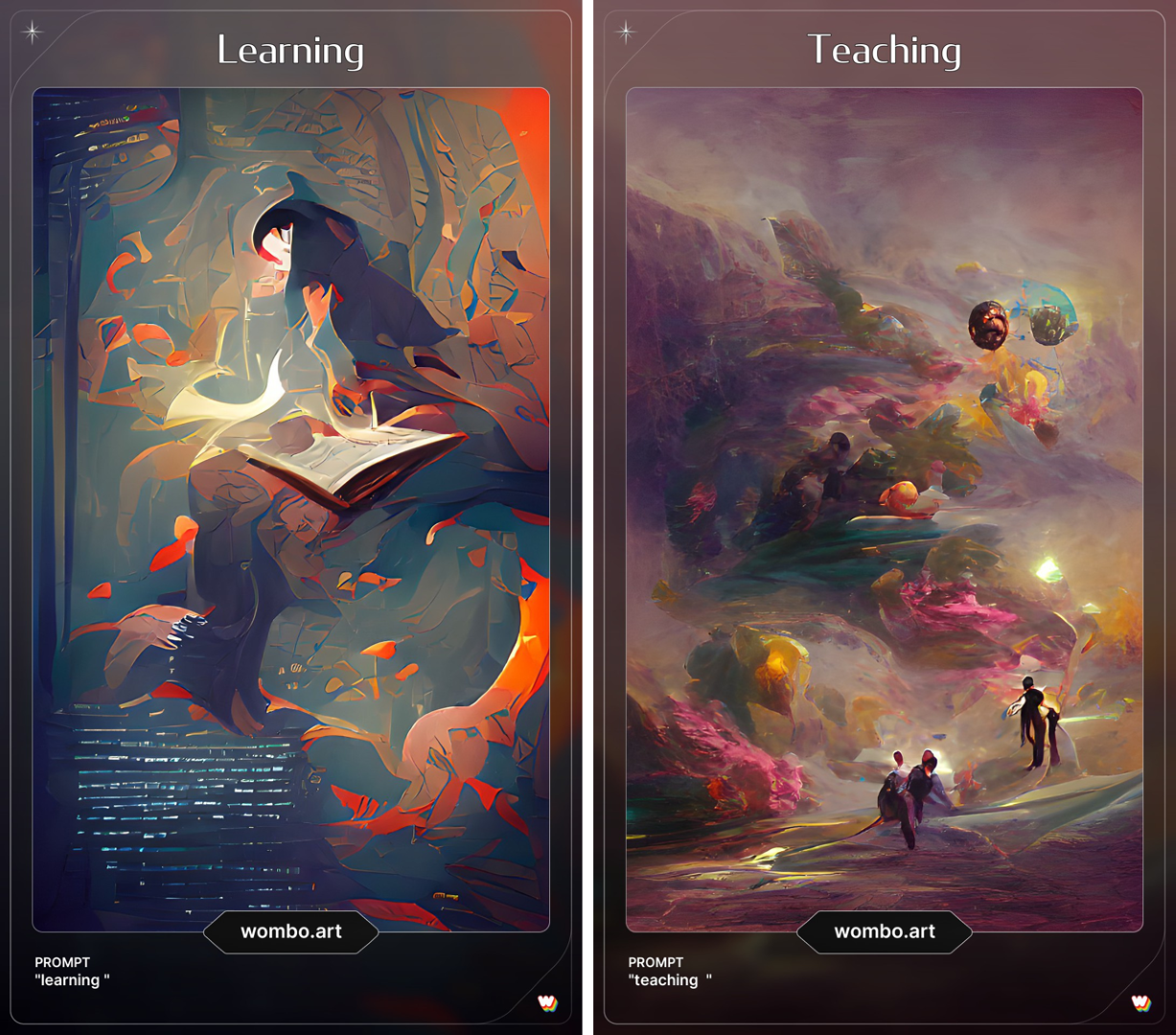
Below I share my graphics created as part of last week’s assignment. You were asked to find or create an image that represents who you are as both a learner and a teacher. I used Wombo.art for this activity, it creates an image for you based on keywords and drawing styles. Feel free to experiment with this tool, or imagine ways it might be used in your own learning activities.
Readings for Week Three
For next week, we start to dig deeper into learning design and some of the theoretical models that may be used to support its’ application. These readings should hopefully push you a little deeper into the theory behind learning design and get you thinking more explicitly about how to design for learning.
Gráinne Conole is a very well known writer and researcher on this topic, and takes us back to the founding theories of Vygotsky to discuss the ecological principles of mediation and affordances in relation to learning. Liz Masterman’s study explores how teachers describe and conceptualize their design processes, identifying the different factors they take into account during curriculum development.
I hope you will find these readings worthwhile. As always, feel free to bring in different perspectives or readings you find useful, either by exploring the works cited in these papers, or in doing your own independent research. If you go this route please do share the resources you find on Mattermost and explain why folks should consider reading them.
You will need to enter the password provided in the syllabus to access them, as these are not open access. These readings are just for EDCI 565 learners. The articles to be read for week three can be found by clicking this link.
For this week, please add at least two annotations to the texts. You might annotate something that you would like to discuss more thoroughly, have questions about, or something you strongly agree or disagree with. You can also reply to the annotations your peers make, engaging in discussion as needed.
Each week, I appreciate you completing the annotations by the Monday before our next class.
If you are having trouble or have questions about annotating with Hypothes.is, please reach out to me directly, I am here to help!
Resources to Bring to Week Three
What did you and your colleagues learn from the pandemic experience of teaching online from a learning design perspective? Talk casually to your social network before next week to gather a few different perspectives. What was the most important takeaway from this experience?
Additional Optional Resources: WordPress Video Tutorial and Activity Theory Presentation


1 Pingback