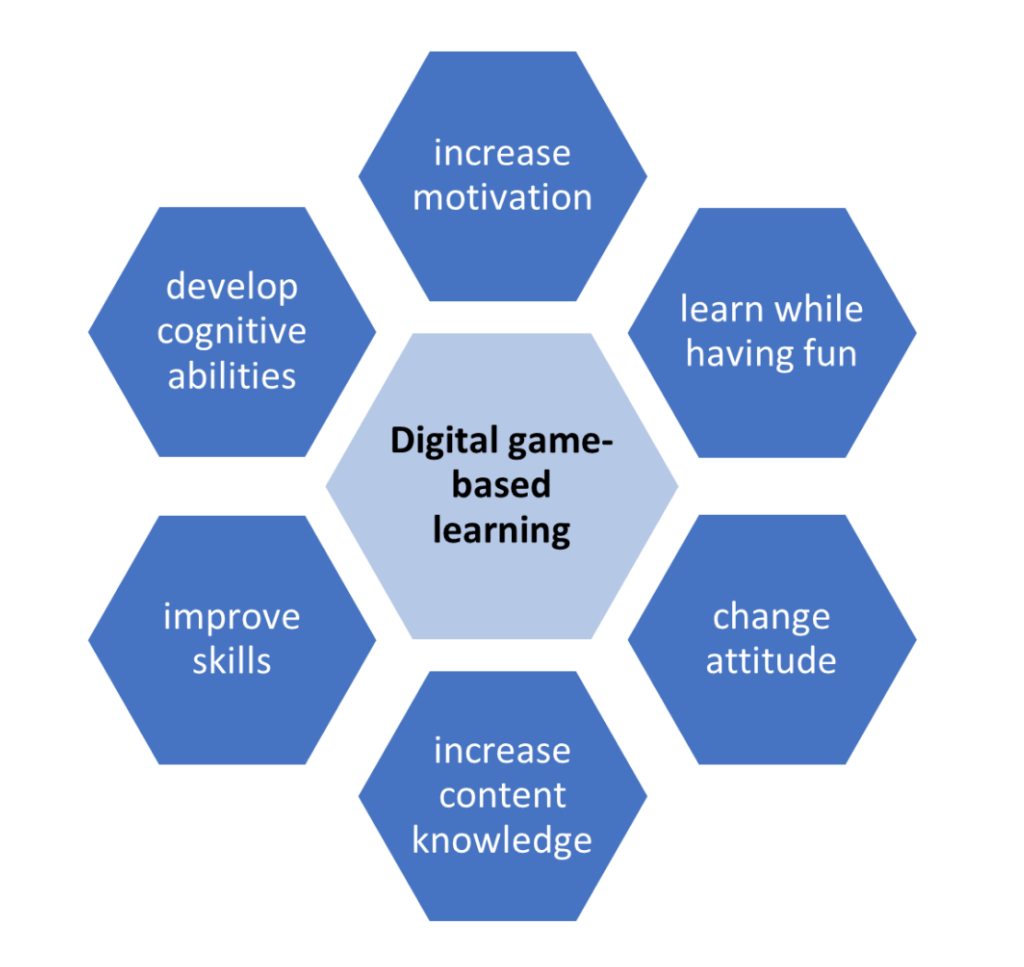
- Does game-based learning improve academic outcomes, or does it only boost engagement?
- Do people learn academic content better from playing a game than from conventional instruction?
- I’m an advocate for game-based learning because there is a different kind of framework for student learning. To discuss computer game learning, they require persistance and problem-solving which are valuable skills to have in life. There are many parallels in playing the games that are applicable when channeled to assignments and other projects. However, I think that many kids can have a strong focus while playing computer games but have difficulty channelling that persistance to work like math problems, reading or writing. Otherwise, computer games need to be played in moderation because its a lot of screen time and does not require physical activity. We discussed how it’s so cool that video games that kids are familiar with can be transferred to physical activity games like Pacman tag, Mario Cart roller panels, MineCraft building with mats and gym objects. So, there are certainly many ways to draw connections with video games and real life.
- I think people can learn academic content better from playing a (computer) game than from conventional instruction. It depends on the context and objective in the game. A game can act as an avenue for students to learn who are usually less drawn to traditional academic ways of learning with pen and paper. With computer games, sometimes you learn specific skills or concepts without them being explicit, whether it be math or science or whatever. It’s like when a parent tries to make you eat a vegetable so they find a way to hide it in their cooking recipe. Another point is that the student needs to actually like the game to begin with to consistently learn the academic content that is interwoven.
- Here is a video that explains some different elements that define Gamification and game-based learning: https://www.youtube.com/watch?v=EfgwcDf7r0w


Leave a Reply