After our learnings this past week, to me, digital design in education involves thinking carefully about how technology can enhance teaching and learning rather than simply adding digital tools for the sake of it. Throughout last week, 4 frameworks helped guide this thinking, including the SAMR Model, TPACK Framework, Technology Integration Matrix, and Community of Inquiry Framework. Each framework approaches digital learning from a slightly different perspective, but together they provide useful ways to reflect on meaningful technology integration in the classroom.
Some models focus more on the transformation of learning tasks, while others emphasize the relationships between teaching practices, student interaction, and content knowledge. Looking at these frameworks together reinforced the idea that meaningful technology integration requires thoughtful planning and reflection. Technology should not simply replace traditional methods but should enhance learning opportunities, support collaboration, and help students engage more deeply with the material.
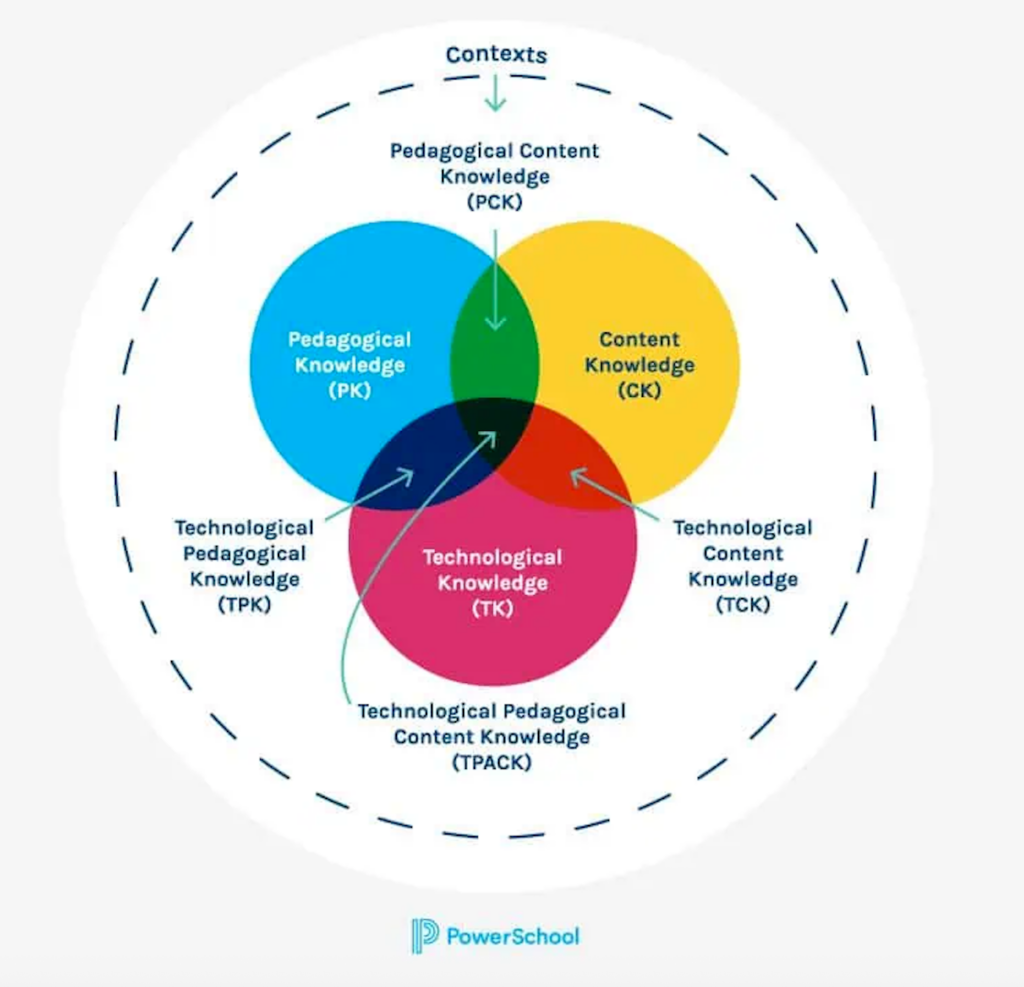
A framework that stood out during our group work in breakout rooms was the TPACK framework. TPACK focuses on the intersection of technological knowledge, pedagogical knowledge, and content knowledge. Our group explored this framework in more depth and appreciated how it highlights the importance of balancing all three areas when designing lessons with technology. However, we also found that TPACK can feel quite theoretical. While it is useful for thinking conceptually about how different types of knowledge interact, it does not always provide specific guidance for how teachers can apply it in a practical classroom setting. For beginning teachers in particular, translating the model into concrete lesson design can sometimes feel challenging.
Overall, these frameworks helped deepen my understanding of digital design and technology integration in education. While some models can feel abstract at times, they still provide valuable ways to think about the relationship between teaching, content, and technology. As I continue developing my teaching practice, I hope to use these frameworks as reflective tools to ensure that technology is used intentionally to support student learning rather than simply adding digital tools without purpose.


Leave a Reply