This week in class we spent our time discussing theoretical edtech integration models which can be use to assist teachers to effectively integrate digital technology into the classroom in meaningful ways. In class 4 models were discussed: SAMR model, TPACK framework, Technology Integration Matrix, and the Community of Inquiry Model. In class we were split up into small groups
SAMR Model
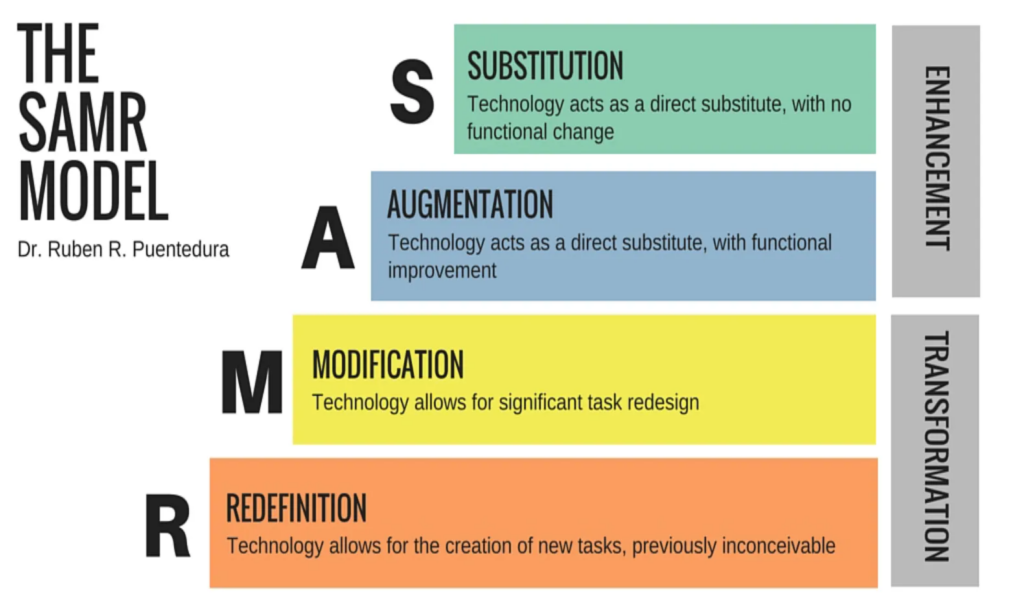
According to Youki Terada, a senior editor at Edutopia, The SAMR model was created by education researcher, Ruben Puentedura in 2010. SAMR is an abbreviation for Substitution – Augmentation – Modification – Redefinition. These four hierarchical goals are then divided into two sub categories: Enhancement and Transformation. When initially incorporating online learning teachers begin in the enhancement section with substitution and augmentation. However, as their skills develop and they learn more can strive to reach the Transformation zone by modifying and redefining what technology integration and online learning can become.
Enhancement
Substitution is the beginning of tech integration in classrooms it essentially means that teachers begin by using technology to replace typical tasks for example, watching a video in class that explains content instead of lecturing or explaining it live for students. Augmentation is when teachers change a function of the technology like using a video with pausing points that provide opportunities for asking questions. This reminded me of the Live It Earth resource that I learned about on our virtual Pro-D day, the speaker was able to show us how the video paused so questions could be asked and students would have time to think and discuss.
Transformation
Modification is where the transformation zone begins. At the modification stage digital technology is used to create and design interactive tasks for students that go above and beyond the limits of their traditional classroom setting. Modified tasks also provide students with opportunities to create work that is not only on a physical paper, it could be something like an interactive canva page, informative video, podcast creation. These are things that cannot easily be translated to physical text. Redefinition takes using technology to that transformative level. Redefining learning offers students with the opportunity to connect learning with the real world and network and learn from people outside of their school’s walls, and have a voice in conversations that matter and are meaningful to them. Essentially, I believe in order to redefine technology use means it needs to be seamlessly integrated and open new doors for students to learn. No matter what type of technology and method students choose to use.
Summary of SAMR Model
I was looking online for a short-form video to summarize what this model is all about, I really enjoyed this one as it was not just a video of someone discussing the SAMR model, the TikTok creator @good.learning.channel paired visuals with dialogue to strengthen viewers understanding throughout the video, so, although it was simple, it was still highly effective. I also found the website 3P Learning did a good job at explaining each stage and providing multiple examples of what each stage can look like.
Community of Inquiry (CoI) Model
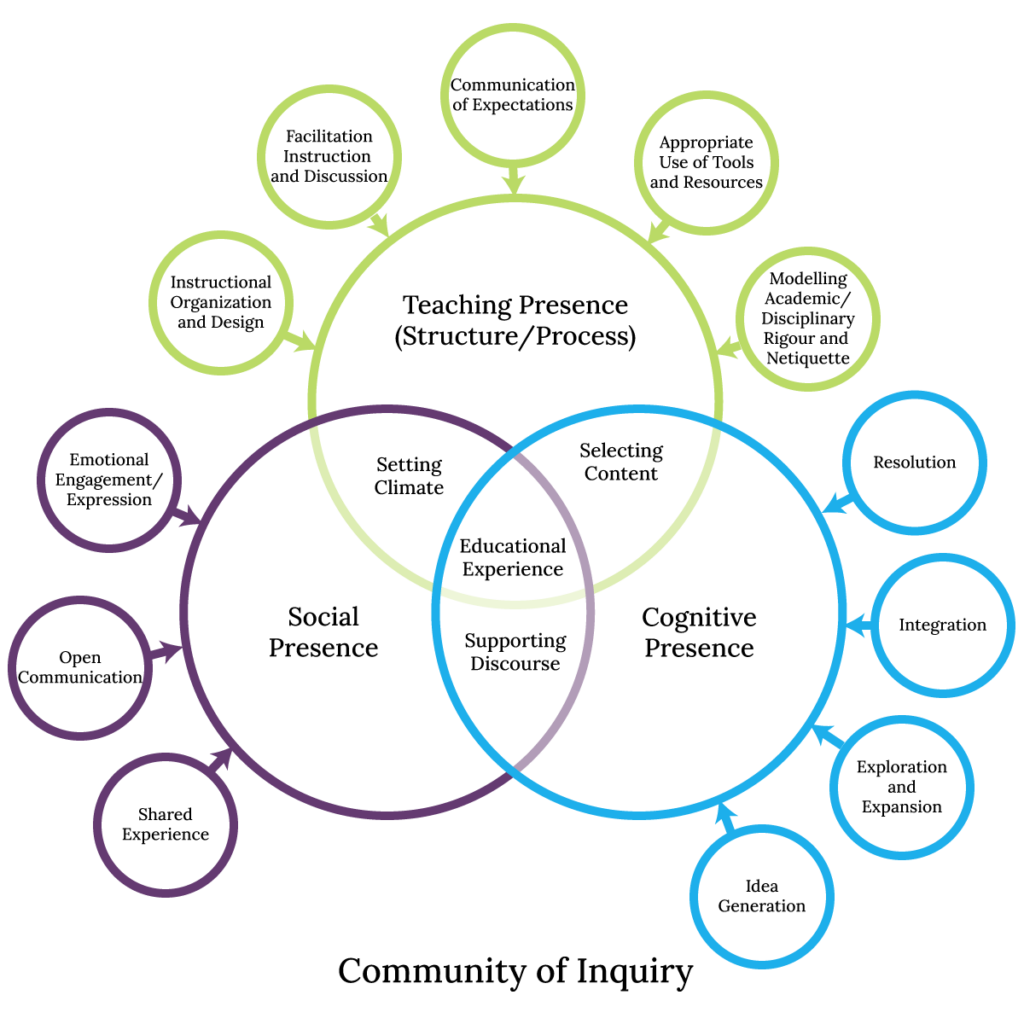
One other model that really stood out to me was the Community of Inquiry (CoI) model. Despite it initially being developed for online learning, research has shown that this model is also helpful in the traditional classroom setting. CoI model is created through a process of combining meaningful learning experiences throughout the development of social, cognitive, and teaching presence, three interdependent factors. I found this document from champlain college saint-lambert that provides helpful insight to CoI use and gives examples of what planning might look like. Although these examples appear to be for the university setting it still shows what the structure and planning can look like when trying to incorporate CoI model in more of their teaching.


Leave a Reply