Goal-Setting and Motivation:
Today, I’d like to focus on motivation and goal-setting when integrating fitness into daily life. I will also tie this post to how goal-setting and motivation are related to student learning.
Having been tracking my workouts for a few weeks, I notice that some activities are easier to follow through with than others. I wanted to explore how goal-setting connects to my motivation and follow-through of weekly activities. I found that when I have specific plans with someone else, I am much more motivated to do the activity. For example, my weekly walks with my friend Ella (usually on Wednesdays) always get done because I am not only meeting her somewhere, but also socializing while getting exercise! With this in mind, I wanted to explore goal-setting for individual workouts.
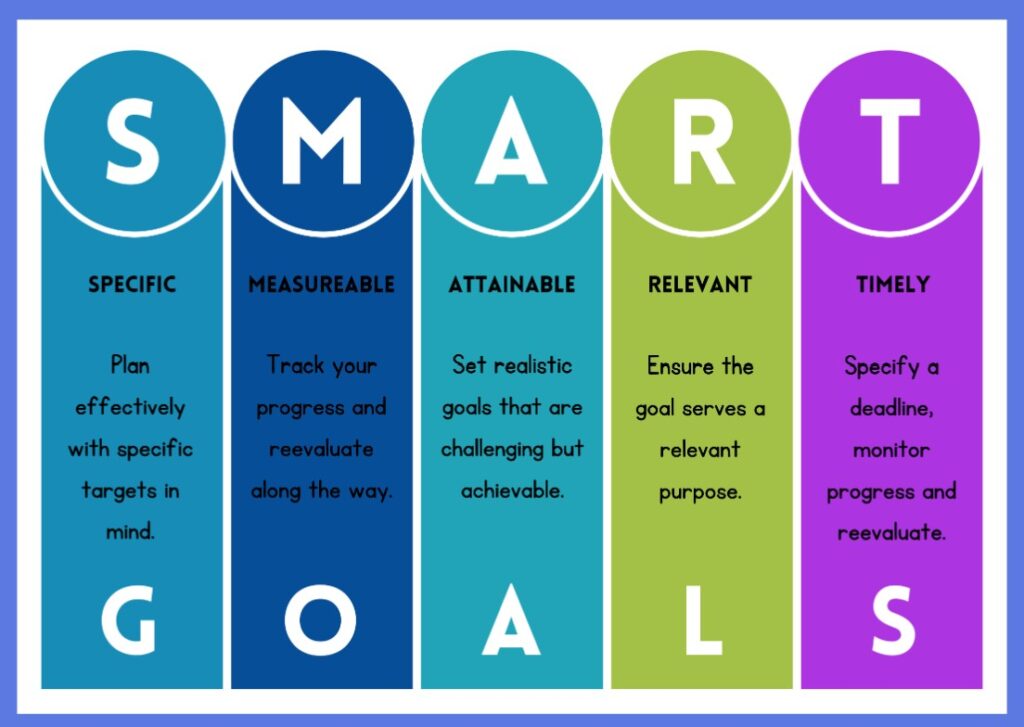
Over the next week, I will incorporate SMART goal-setting into my fitness schedule. This acronym is frequently used in goal setting, as SMART stands for specific, measurable, achievable, relevant, and time-bound. Some examples of my goals are below:
Goal 1: Specific: I will not miss more than one scheduled workout per week. Measureable: count completed sessions, Achievable: plan my workouts on days I am free and set reminders, Relevant: regular workouts will build habits, Time-bound: each week for the next 2 months
Goal 2: Specific: I will complete all my scheduled workouts for the week. Measureable: 3 workouts logged on my tracker, Achievable: schedule workouts around work and school commitments, Relevant: following the plan will help improve fitness and strength, Time-bound: by the end of next week, I will have completed every workout planned
To implement my goals, throughout the coming week, I will write them down, log their completion after each session, and reflect on my progress each day.
Some things I hope to observe over the next week are that I want to be more focused and consistent, thanks to a clear target. Breaking larger goals into smaller ones (such as weight or repetition goals) can make my workouts feel more achievable. Using a visual tracker can help me clearly keep track of the exercises done. Reflecting on times when I miss a goal can help me figure out what happened and how to change for next week or the next workout.
Connections to Education:
In the school environment, students are increasingly engaging in goal-setting. I have seen it done in the elementary school classroom in a grade 2/3 split class. Each term, students will reflect on the core competency goals they have been working on. The whole class will usually brainstorm ideas for each competency, then individually write which goals they have achieved and are still working on. It is important for students to reflect on their learning, not only on content-specific learning but also on their overall development goals. Another way goals are often used in the educational setting is as student “I can” statements. Presenting these “I can” statements at the beginning of a unit can help students understand what is expected of them throughout the unit/topic and allow adjustments to these statements if IEP needs need to be met. Student goals can benefit not only the individual but also the whole classroom community. Using this website, I know that phrasing things positively can help motivate students and be more effective. Creating small goals can also help students, as they can achieve multiple each day and better understand the steps. Growth mindset is an important part of goal setting, as well as sometimes we may not always achieve goals right away, and that’s okay. I encourage you, the reader, to explore this article and others like it to see the many ways goal setting is important in the elementary classroom.


Leave a Reply