This week in class, we discussed different frameworks used for designing for learning, such as ADDIE, Understanding by Design (UbD), and Universal Design for Learning (UDL). Throughout the classes I have already taken in the education program, I have learned different ways to include UDL in my teaching practices. I truly believe that it is important for all teachers to learn about the principles of UDL and how to incorporate them in their classrooms, as it not only supports diverse learners but all students. This was my first time learning about UbD and ADDIE, and both are very interesting and seem like beneficial frameworks for a teacher.
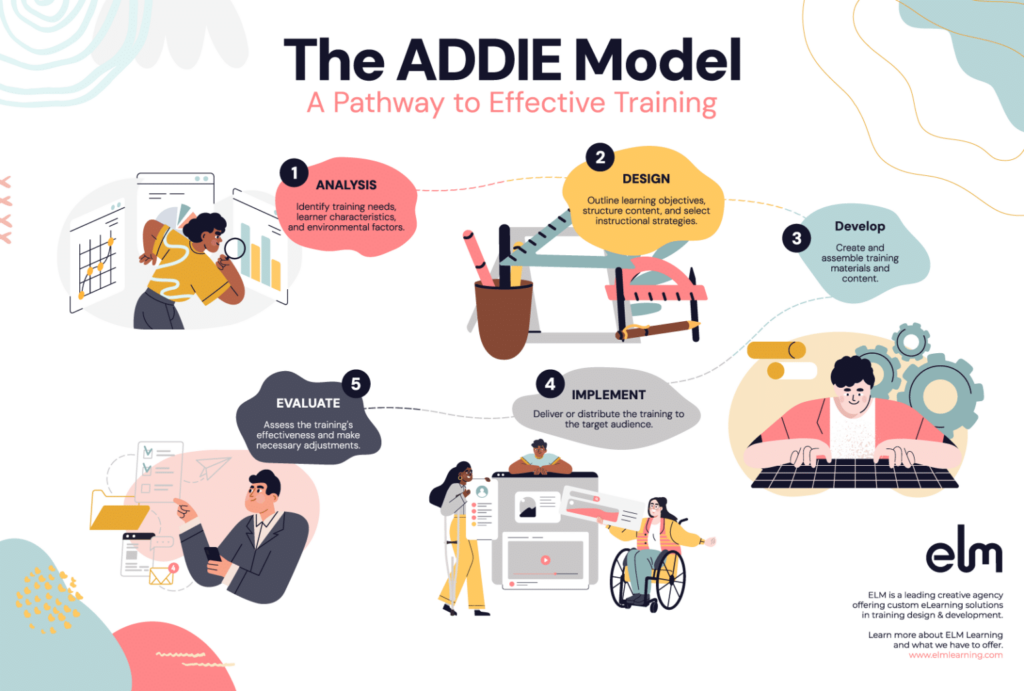
Addie stands for:
- Analyze
- Design
- Develop
- Implement
- Evaluate
When looking more into the ADDIE model, I found an informational website that explained the model and its benefits and downsides. It highlighted how, although the model provides flexibility, strong structure, and is widely recognized, it can be very time-consuming and resource-intensive. Below, I have attached a useful graphic breaking down the model.
UbD focuses on the idea of backward design, meaning when planning unit or lesson plans, begin by thinking about what the end goal is and what I need to do to achieve it. This concept has been discussed before within the courses we have taken so far, especially when talking about creating assessment tools, lesson plans, or unit plans. It is clear that to create a quality plan for your students, you must have the end goal in mind. It can be easy to get excited by a fun-looking lesson plan or an interesting assessment tool, but it is crucial to consider whether it will help you get to your end goal before jumping into using it.


Leave a Reply