Last week in class, we learned about Universal Design for Learning (UDL) and Understanding by Design (UbD). UDL is focuses on establishing learning environments that are supportive of student’s learning needs.
Universal Design for Learning (UDL)
UDL emphasizes that within education, there’s no “one-size fits all” when it comes to student’s learning. It is vital that we as educators take several factors into consideration about learners when teaching. Implementing UDL allows us to reduce and/or remove barriers that students often face in our learning environments. There are three main components to UDL:
Representation
This involves ensuring that information is presented in multiple modalities and formats. This can include video, text, and audio.
Action and Expression
Within this component, it is encouraged to provide students with multiple ways of demonstrating their knowledge and skills. This can include verbal, performance, writing, and additional methods.
Engagement
The final element of UDL involves offering several ways for students to engage with information and learning materials. Examples of this can include incorporating student interests and different identities.
I found this infographic to provide a helpful breakdown of each component and further broke them down into more specific details.
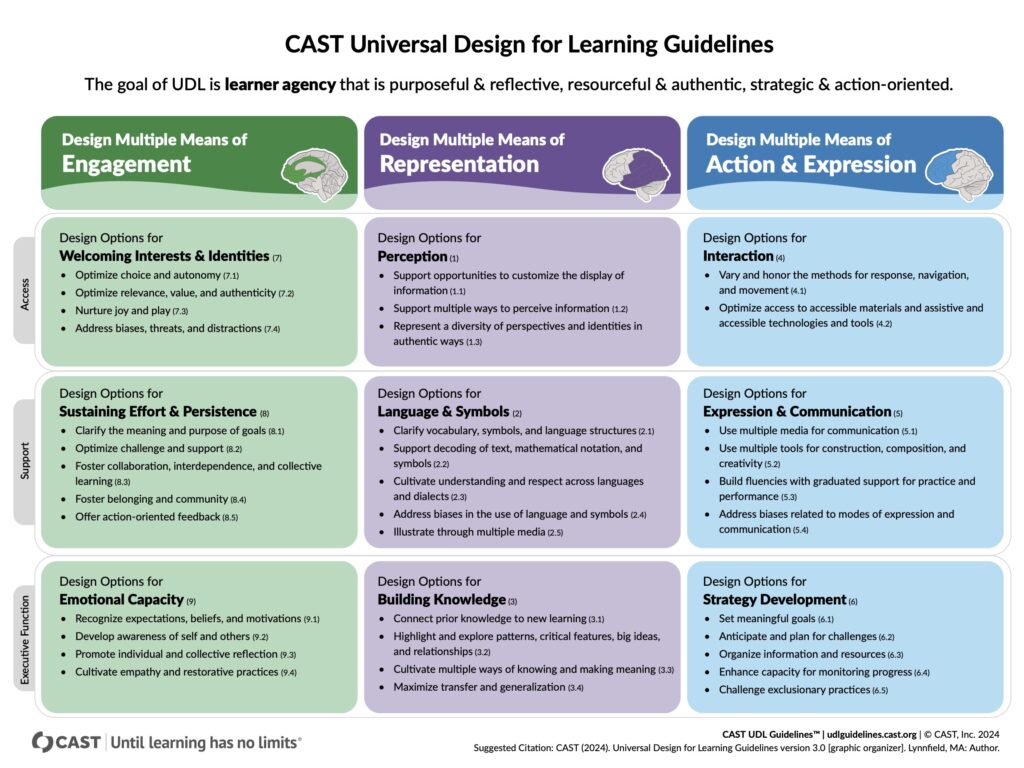
UDL Guidelines from CAST
Understanding by Design (UbD)
UbD is a framework that emphasizes backward design. Backward design involves determining what the desired end goals areas well as focusing on student’s understanding of learning. Educators are encouraged to frequently assess student’s understanding in order to maximize learning and modify the learning journey where needed.
Within Backward Design, there are three essential stages:
- Stage 1: Identify the Desired Results
- Stage 2: Determine Acceptable Evidence
- Stage 3: Plan Learning Experience and Instruction
I found another infographic that includes guiding questions for each stage to help educators plan:
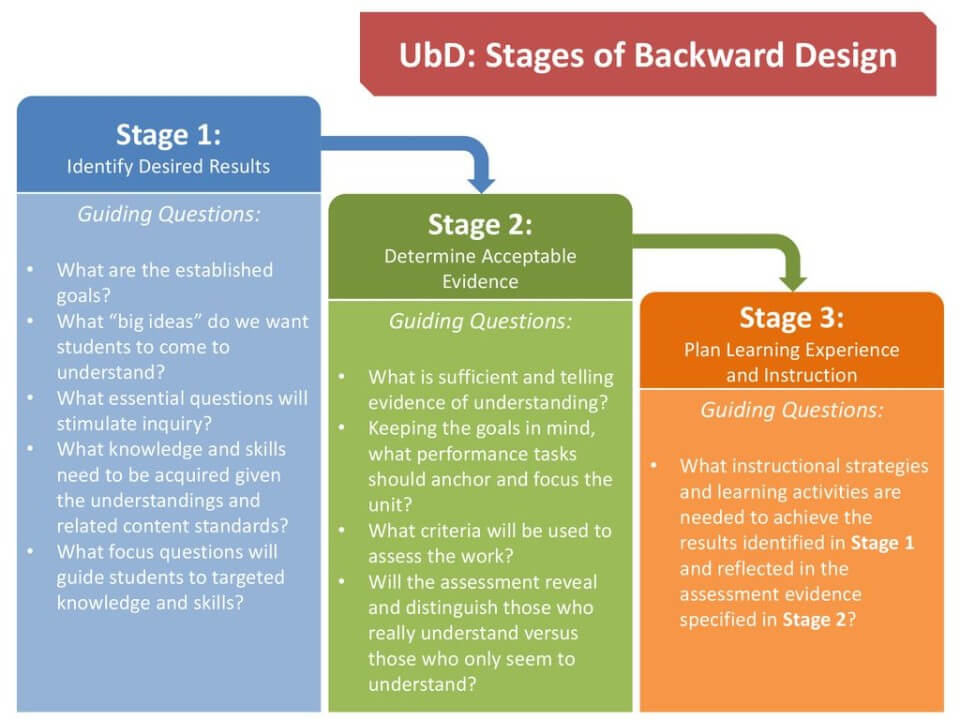
UbD: Stages of Backward Design by EKYA PDI
Both of these frameworks have been extremely helpful in understanding how to create an accessible and effective learning environment that I plan to implement within my future classroom.


Leave a Reply