Jesse’s Posts
August 3rd, 2026 – August 11th, 2026
AI and Social Media https://youtu.be/xeBxfajPTZ4 – LECTURE AND BLOG REVIEW
• What are the specific risks and opportunities AI introduces for digital citizenship within Canadian education?
• What role does media literacy education play in empowering learners to critically assess AI-generated content, misinformation, and extremist narratives online?
• How effective are current Canadian policies and educational initiatives at addressing AI-driven misinformation and online radicalization?
READ: “Wait… What?” Media Literacy Week highlights growing concern over AI-driven misinformation Wait. What?
Blog Post
Describe an example of AI-amplified misinformation observed on Canadian social media, explain its potential impact on public opinion, and link your reflection to one of the resources above. Propose and justify a media literacy curriculum segment that teaches learners/employees to critically assess AI-driven social media content.
Support your thoughts with Canadian policy or research evidence.
https://ised-isde.canada.ca/site/ised/en/canadas-national-artificial-intelligence-strategy-ai-all
https://rachelgilmore.substack.com/p/carney-has-ai-strategy-for-all-unless
https://www.cbc.ca/news/politics/carney-ai-strategy-9.7223236
Privacy Compliance
In Canada, privacy regulations like PIPEDA (Personal Information Protection and Electronic Documents Act) govern how organizations collect, use, and disclose personal information in the private sector. However, educational exceptions and patchwork provincial laws mean that data practices in PLNs often fall into unclear jurisdictional spaces.
Educators and institutions must ask:
• Is personal data being collected without explicit educational purpose?
• Are third-party analytics compliant with Canadian privacy standards?
• Do students have meaningful control over their information?
Blog Post
Consider that Personalized Learning Networks offer transformative potential for professional learning and collaboration. However, these benefits come with embedded systems of data harvesting and third-party collection that have ethical, educational, and social implications.
A critical, reflective, and policy-informed approach is essential, especially in the Canadian context, where privacy expectations intersect with digital learning innovation. As educators and learners, we must not only partake in PLNs but also understand and challenge the data systems that underlie them. Create a blog post reflective of the questions above and incorporate these themes into your final project.
INCOMING FINAL PROJECT ANNOUNCEMENT AFTER LECTURE TONIGHT

July 29th, 2026 – August 3rd, 2026
Who Needs To Know About Your PLN?
Consider the following questions as you shape your blog post.
• Do you continue with your current created content and your professional network?
• How do you use your PLN skills in professional practice?
READ: Digital Leader: 5 Simple Keys to Success & Influence Ch. 16
Qualman, Erik – Empower Others https://learning-oreilly-com.ezproxy.library.uvic.ca/library/view/digital-leader-5/9780071792424/ch16.html#ch16
Recommended Library Audio: Tell Everyone Why We Share & Why It Matters – Hermida, Alfred
https://open.library.ubc.ca/cIRcle/collections/facultyresearchandpublications/52383/items/1.0074593
Blog Post
Reflect on your experience in the course, your development of PLN, your use of social media platforms and networked publics, and any changes in your perspective of social media in professional settings and personal use.
Your PLN and the Evolving Internet
Reflect on how PLNs and AI influence equity, accessibility, and professional growth.
Consider how you would demonstrate the ability to synthesise academic research with personal experience and professional practice using social media tools.
READ: Estaiteyeh & Mindzak — Building AI Literacy in Pre-Service Teacher Education in Canada https://jtl.uwindsor.ca/index.php/jtl/article/view/10041
Blog Post
• Reflect on your current PLN: which networks, tools, or communities you engage with
(e.g., BlueSky, LinkedIn, EdTech communities, provincial teacher networks).
• Reflect on how these networks support your professional learning goals. Include at least one Canadian source that discusses PLNs in the Canadian educational context (e.g., provincial or national teacher professional development).
• Critically assess the strengths and weaknesses of your PLN and the inclusion of AI.
• Consider aspects such as diversity of perspectives, relevance, accessibility, and quality of resources.
END/

July 20th, 2026 – July 27th, 2026
Public PLN – Balancing PLN, Media Literacy, & Public Discourse
Questions to consider as you navigate the first section of your two-part blog this week.
• How do notable individuals use social media?
• What are the benefits of being in the public eye and having a PLN?
• Building community with online tools provided by the employer can be limiting; what are the perceived restrictions and benefits?
• Delivering information in a connected society requires verifiable resources; how do you build a PLN to rely on?
• How do those who are veteran storytellers minimise risk in sharing misinformation?
• What is media literacy?
• Why is it important?
• Why is it dismissed?
• Why should you aim for varied views but factual consensus in your PLN?
Watch: Media Literacy – Media Smarts Facts Matter – Course YouTube Channel
Read: 21st Century Skills – Learning for Life In Our Times Trilling, B & Fadel, C – Digital Literacy Skills -Media Literacy pp.66 https://tinyurl.com/4n2cn89n
Watch: In the Public Eye – Social Media and Evening News – Course YouTube Channel
Read: Navigating Social Journalism: A Handbook for Media Literacy and Citizen Journalism by Martin Hirst Chapter 4. The Political Economy of Fake News – pp.78
http://ezproxy.library.uvic.ca/login?url=https://www.taylorfrancis.com/books/9781315401263
Blog Post
• Explore the video provided and reflect on the themes and questions above, reflecting on how you would curate your social media with a critical public audience.
• Identify the risks and benefits of engaging with a public audience in a media space
• Consider what the risks for a public figure or person in a position of trust (educator, lawyer, government official) may be?
• How to best address negative replies and critiques reflective of your personal values and employer social media policy?
• Open dialogues about media literacy and factual information can create conflict; why does this happen?
• What is the benefit of having a PLN that values media literacy?
PLN & Education
Community communications go beyond blogs and social media shares; how does a PLN help and hinder development of thoughts and ideas in education discourse?
• How do educators create discourse?
• What is the role of social media in education?
• What are some problems with social media communications in education settings?
Watch: Education in a Connected Culture Dyer, Harry – Course YouTube Channel
Read: Developing Personal Learning Networks for Open and Social Learning / Alec Couros- Chapter 8
Blog Post #2
• Explore the video provided and reflect on the themes of a PLN in a professional capacity.
• Which social media platforms are beneficial in education?
• When working with the vulnerable sector, how does social media fit into professionalism and regulations?
BIG REMINDER – LISTEN TO THE INTERVIEW WITH SOPHIE LUI, TAKE NOTES, FIND HER REFERENCE POINTS, CONNECT THE VALUES AND PULL FROM MEDIA LITERACY RESOURCES PROVIDED.
/END
ME: FEELING LIKE WE’RE ALL MOVING FORWARD… (if I’m wrong, please tell me)

July 13th, 2026 – July 19th, 2026
WEEK 2 – Personal Digital Identity vs Professional Digital Identity
Read: PLN space through Social Media platforms (Developing awareness)
Privacy, Ethics & Security in Digital Spaces: Developing Awareness of Privacy
https://link-springer-com.ezproxy.library.uvic.ca/content/pdf/10.1007/s10676-018-9492-2.pdf Regan, P., & Jesse, J. (2019).
https://digitaltattoo.ubc.ca/quizzes/privacy-and-surveillance/
V and R Mapping
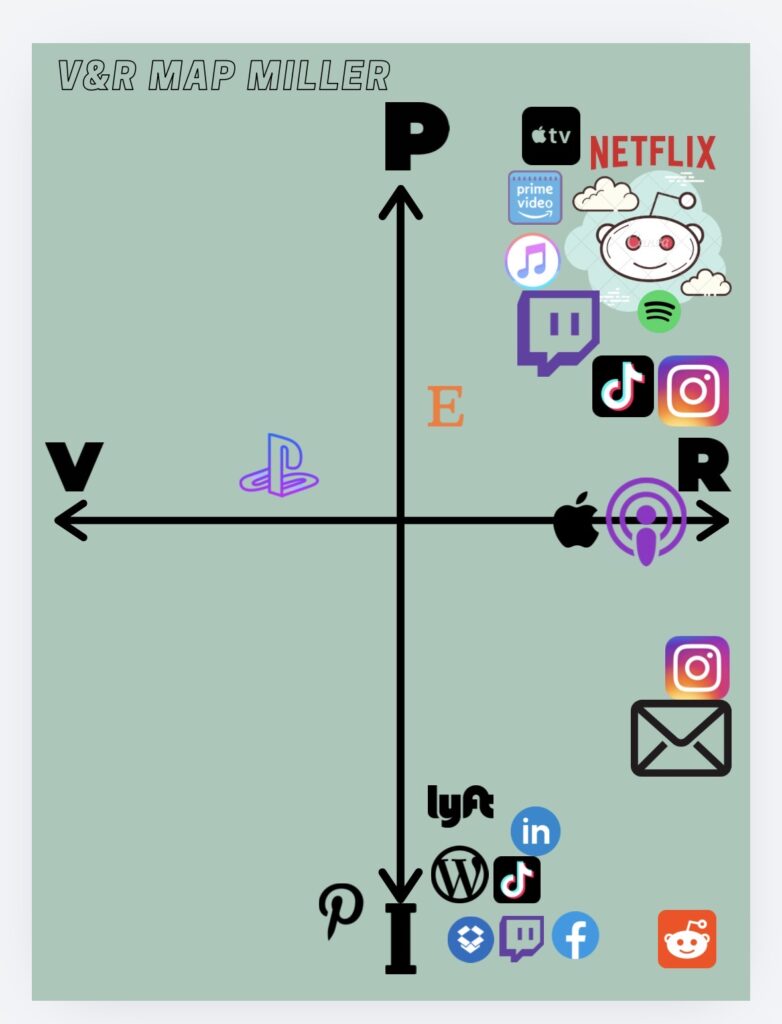
What is a Visitor/Resident
Visitor & Resident Maps
Blog Post Section
Share your Visitor & Resident Map with the main group when completed and include in your blog.
Feel free to create your map from the provided PDF using Canva or similar, clipart, or handwritten.
Blog Post Section Questions:
• What digital platforms are students currently using to develop their professional
network?
• What could the student consider in expanding their professional learning network?
• Consider in your blog submission how an employer would respond if you applied for a job with them, and they assessed your social media presence via your digital identity.
https://firstmonday.org/ojs/index.php/fm/article/view/7802/6515
How do data privacy and security limit and/or promote a PLN? In your network, how can you create a digital identity reputation?
BLOG NEXT SECTION 2
Your PLN – Inclusion & Community Engagement.
• How diverse is your PLN?
• Are you learning from a variety of diverse voices and are you expanding your understanding of the views of others?
• What is a learning outcome of your PLN, and how are you ensuring your exposure to diversity and inclusion?
WATCH: PLN DIVERSITY, INCLUSION, AND SOCIAL MEDIA – Course YouTube Channel
READ: One Without the Other: Stories of Unity Through Diversity and Inclusion Shelley Moore and Leyton Schnellert Introduction & Part 1. https://ebookcentral.proquest.com/lib/uvic/reader.action?docID=4832579&p++pg=11&c=RVBVQg&ppg=1
READ: Media & Social Justice – CHAPTER 4 A New Vision for Public Media Open, Dynamic, and Participatory Jessica Clark and Patricia Aufderheide
https://link.springer.com/book/10.1057/9780230119796?v3=true
Blog Post Section – How has your thinking about inclusion and PLN evolved?
Create a blog post on inclusion in a professional setting of your choice – reflect on how social media can play a role in helping you establish messaging and themes that are inclusive and diverse.
In the context of employment, having a PLN that is public and engaging requires risk assessment and policy understanding; consider the following:
• How does social media engage communications?
• How does social media challenge communications?
• Is it inclusive?
• Does your PLN amplify the views of others?
• The policies of employer social media communication expectations.
What are the benefits of a diverse and inclusive PLN in social media sharing that understands where you are coming from with messaging that impacts the community?
END/
ME: FEELING EXCITED TO GET THINGS GOING – please read the post below, but here’s my intro video
July 6th, 2026 – July 12th, 2026
Welcome to the first week of EDCI 338 A02 with Jesse Miller.
I trust the start of the summer term has been somewhat restful. I will have an intro video to share as I confirm our class list and curriculum – feel free to watch it at your leisure once sent out.
We will be communicating using MS TEAMS; log in via your UVIC email. We’re going to ease into this.
Please sign up via computer or mobile device (available in the app store) and message me @jessemiller when you have set up your account profile.
| In the first week, you will start to connect with your classmates as you begin to form your personalized learning network with the participants of this course. You should also take some time to reflect and consider the themes of this course and complete some readings to introduce yourself to the concept of Personal Learning Networks (PLN). Review course outline & overview (link below) Review privacy and confidentiality expectations (below) Blog setup Open Ed – Clone EDCI338 Template *REALLY IMPORTANT* Establish MS TEAMS communication profile Set Up WordPress & Class-Specific Social Media Accounts (Threads, Instagram, YouTube) Personalize your blog Create an introductory post & video Organizing content with categories Coordinate & Organize learning pods |
I will be assigning Learning Pods as we confirm participants; please make an effort to complete your introduction on your blog, personalize your blog images/video etc.
A reminder, any images, videos, or content you source from the internet should be attributed to the source/creator of the content (even if the creator of the content is you).
Course Outline Here
FIRST ASSIGNMENT: Week One in the outline.
PLN & Public Communications & Digital Identity
You will participate in a class discussion using online communications tools on Personal Learning Networks and digital identity, based on the readings below.
As well, you will work within your class network group, and complete a digital identity exercise in your blog exploring the following:
• What does it mean to network using social media?
• How are we motivated to participate in networked publics?
• What are the risks & rewards of public communications?
Digital Identity
• What is a digital identity?
• How do personal versus professional approaches to digital identity affect social media use?
• How do digital identities converge in networked publics – what are the impacts and/or benefits?
Blog Post #1 – Your first blog post should include reviewing the questions above and ideas on Personal Learning Networks and digital identity, based on both the readings and videos provided.
Additionally, in your network group on MS TEAMS, complete a digital identity exercise. You are encourage to reflect on your controlled and uncontrolled social media presence – this requires you to privately source and identify your social media content that you have either created or have had shared – this discussion exercise is reflective and designed to help you curate a professional digital identity while controlling private content (note – if any content is uncomfortable to explore or discuss openly, please consider reaching out to myself or support networks).
READ: Course Introductory Conversations
https://www.futurelearn.com/courses/learning-network age/0/steps/24644
https://bright.uvic.ca/d2l/le/content/68182/viewContent/363492/View
https://firstmonday.org/ojs/index.php/fm/article/view/3559/3131
https://ojs.library.queensu.ca/index.php/surveillance-and society/article/view/networked
• How do personal versus professional approaches to digital identity affect social media use?
• How do digital identities converge in networked publics – what are the impacts and/or benefits?
READ: Identity-Making and Social Media – Spracklen, Karl
https://link.springer.com/chapter/10.1057/9781137405876_6
Digital professional identity: Dear Internet! Who am I?
WATCH: ERIC STOLLER – What is Digital Identity?
The Value of Digital Identity for the Global Economy and Society
Latest post
Useful Links
- Your portfolio on Opened.ca
This work is licensed under a Creative Commons Attribution 4.0 International License.
Posts authored by learners in EDCI338 are licensed according to the terms on their individual sites and are aggregated here with permission.
2026 EDCI 338 — Powered by WordPress
Theme by Anders Noren — Up ↑