Flight Path
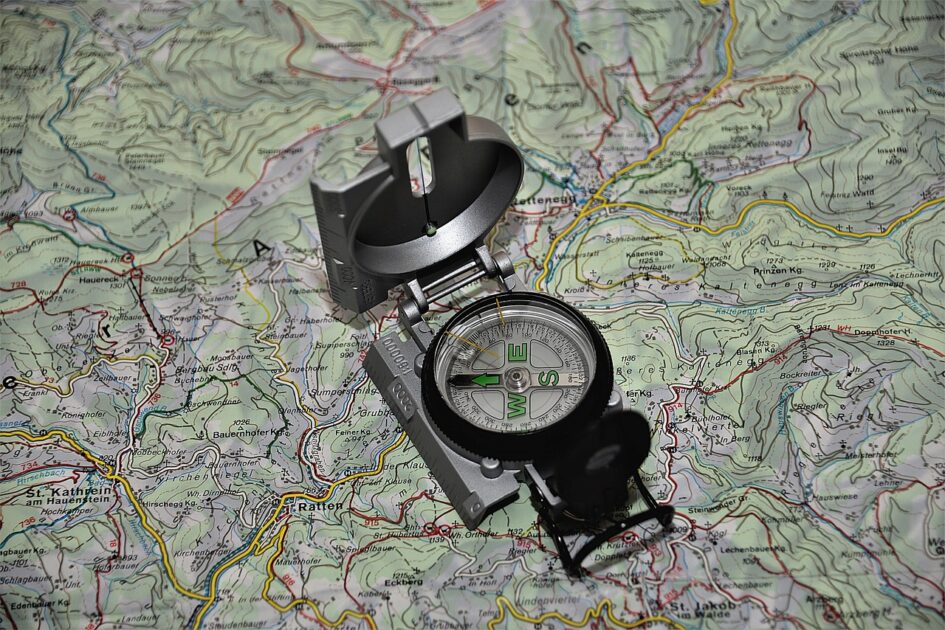
The Flight Path is your first step in EDCI 337. It is a forward-looking exercise designed to help you articulate your intentions for the course by aligning your personal ambitions with the course objectives and identifying the skills you hope to develop by the end of the semester. Rather than functioning as a simple “to-do” list, the Flight Path invites critical reflection on your current starting point and serves as a declaration of where you intend to go. In this reflection, you will outline your goals, acknowledge your prior experiences, and anticipate the learning and growth that lie ahead. (~500 words)
Submit your Flight Path in the Mattermost channel here: Flight Path, Substantive Posts, & Learning Reflection Report.
Consider answering the following questions:
- Current Coordinates: What is your background with interactive or multimedia? What skills do you bring (e.g., teaching, pedagogy, design, storytelling)?
- Mapping the Route: What do you want to achieve? Is there a specific project, medium, or concept you are itching to explore? How do your goals compare to the course objectives?
- By the end of this course you will be able to:
- Contextualize how learning inform interactive and multimedia experiences
- Apply multimedia design principles in planning your educational resources
- Engage in design thinking to create multimedia learning projects
- Apply storytelling principles in creating effective learning opportunities
- Describe and apply principles of effective interactive multimedia design
- Generate a variety of prototype artifacts including: comics and web pages
- Use GenAI appropriately as a tool to support creative activities
- By the end of this course you will be able to:
- Anticipating Turbulence: What concepts or technical skills look the most daunting? How do you plan to navigate these challenges?
Assessment Rubric
| 0 – 2 (Needs Additional Work) | 3 (Marginally Meets Expectations) | 4 (Fully Meets Expectations) | 5 (Exceeds Expectations) | |
| Self-Assessment (Prior Knowledge) | Little to no mention of current skills or starting point. | Vague description of prior experience without connecting it to the course. | Accurately identifies current strengths and areas for growth regarding multimedia design. | Provides a nuanced “baseline” of their skills, showing deep self-awareness of their starting point. |
| Goal Setting & Alignment (Course Content) | Fails to reference course objectives or set clear personal goals. | Mentions course objectives but does not explain how they align with personal goals. | Clearly aligns personal learning goals with specific course objectives. | Sets highly specific, ambitious goals with a clear rationale for why they matter to their growth. |
| Strategic Planning | No mention of how goals will be achieved or challenges met. | Identifies potential challenges but offers generic solutions. | Identifies specific potential “turbulence” and outlines a logical plan to overcome it. | Demonstrates foresight and strategic thinking in how they will manage their learning and use resources. |
Generative AI Guideline

This assignment is designed to develop your ability to articulate original ideas and construct well-structured arguments. You may use AI tools in the post-draft stages only for structured support, such as clarifying your approach or engaging in meaningful revision, while maintaining the integrity of the core writing process.
If you have any questions about permitted AI use, please contact me before you use the AI tools.
| Stage | Permitted AI Use | Not Permitted |
| Before drafting | None | Any AI system for idea generation, outlining, or paraphrasing |
| After complete draft | Receiving feedback on structure, coherence, and alignment with the rubric | Rewriting content via AI suggestions |
Here is a sample prompt you can use with an LLM of your choice (e.g., Gemini, ChatGPT) to get the most out of AI while adhering to permitted AI use.
I am a student in an undergraduate-level Educational Technology course. I am writing my first assignment, the 'Flight Path,' which is a forward-looking reflection (~500 words).

The assignment has three main sections:
1. Current Coordinates: My background and existing skills.
2. Mapping the Route: My personal goals and how they align with the 7 course objectives (e.g., design thinking, storytelling, GenAI use, and prototype artifacts like comics/web pages).
3. Anticipating Turbulence: Challenges I expect to face and my plan to navigate them.

Your Role: Act as my academic writing coach. Please review my draft based on the provided rubric.

Your Tasks:
 - Check Alignment: Does my 'Mapping the Route' section clearly address specific course objectives, or is it too vague?
 - Structure & Flow: Does the transition from my past experience (Coordinates) to my future goals (Route) feel logical?
 - Tone: Is the reflection critical and intentional rather than just a 'to-do' list?
 - Coherence: Identify any areas where my phrasing is repetitive or where my 'Turbulence' plan lacks a concrete strategy.

Important Constraint: Please do not rewrite the text for me. Instead, give me specific, actionable suggestions or ask me clarifying questions that will help me improve the draft myself.

Flight Path Assessment Rubric
1. Self-Assessment (Prior Knowledge)
0–2 (Needs Additional Work): Little to no mention of current skills or starting point.
3 (Marginally Meets Expectations): Vague description of prior experience without connecting it to the course.
4 (Fully Meets Expectations): Accurately identifies current strengths and areas for growth regarding multimedia design.
5 (Exceeds Expectations): Provides a nuanced "baseline" of their skills, showing deep self-awareness of their starting point.
2. Goal Setting & Alignment (Course Content)
0–2 (Needs Additional Work): Fails to reference course objectives or set clear personal goals.
3 (Marginally Meets Expectations): Mentions course objectives but does not explain how they align with personal goals.
4 (Fully Meets Expectations): Clearly aligns personal learning goals with specific course objectives.
5 (Exceeds Expectations): Sets highly specific, ambitious goals with a clear rationale for why they matter to their growth.
3. Strategic Planning
0–2 (Needs Additional Work): No mention of how goals will be achieved or challenges met.
3 (Marginally Meets Expectations): Identifies potential challenges but offers generic solutions.
4 (Fully Meets Expectations): Identifies specific potential "turbulence" and outlines a logical plan to overcome it.
5 (Exceeds Expectations): Demonstrates foresight and strategic thinking in how they will manage their learning and use resources.

Current Draft
[PASTE YOUR DRAFT HERE]
Tips for Using AI for Feedback
- Be Specific: If you are worried about a specific section (e.g., “Goal Setting & Alignment”), ask the AI to focus specifically on that part of the rubric.
- The “Why” Matters: If the AI suggests a change, ask it why that change would improve the score. This helps you learn the underlying principles of design and communication.
- Iterate: Don’t just take the first set of feedback. If the AI says your goals are “vague,” ask it: “Can you give me an example of what a ‘highly specific’ goal looks like in the context of EdTech?”
- Maintain Your Voice: Remember that the AI doesn’t know your personal “voice” or your specific project as well as you do. If its suggestions feel too robotic, disregard them.